
Thousands of Free Drum Lessons & Play-along Sheet Music
Welcome to your ultimate free drumming curriculum! Designed for marching drumline (DCI/WGI) percussionists and drum kit players of all skill levels, this resource hub features thousands of video play-alongs with on-screen sheet music and audio. Almost every exercise links to a dedicated YouTube playlist or video featuring timestamped BPM options in the description, allowing you to instantly jump to your exact target tempo. Whether you are an independent player aiming to build speed or a music educator developing a syllabus, you can stream beginner-to-advanced rudiment lessons and practice tracks that help you "listen in" and simulate playing alongside other percussionists. It's everything I wish I had when I first started drumming in 1998 and teaching in 2003, but I'm giving away these thousands of resources for free because I don't want the cost of participation to prevent someone from learning how to drum.
Navigate the directories below to target exactly what you want to practice. Push your physical endurance and rudiment vocabulary as a marching percussionist in the chops section, or master advanced stick control with over 1,000 grid variations. Drum set players can build complex four-way coordination using the straight and swung limb independence drum charts and coordination exercises, while the marching bass drum section offers specialized timing exercises and multi-drum permutations that simulates practicing with the rest of the bass line. You can also stream full drumline cadences and packets in the scores + ensembles section, test your rhythmic accuracy and reading with research-based sight reading exercises, and refine your playing with hundreds of technique exercises. Finally, the tips + lessons section has hundreds of videos sharing what I've learned studying with world champion drummers (and their drum instructors). New play-alongs release daily and new drumming tips and lessons release weekly, so stay tuned for more free content. If you'd like early access to any of the hundreds of "members first" videos, click here to learn more about channel membership for less than $1.
PS If you're still unsure about what to practice, pick a section below and read some of the summaries or watch this video.
September 21st, 2026
Are you struggling with how to mark time while playing syncopated rhythms and off-beat accents? In this fake prescription commercial, I introduce "Gestaltium," a conceptual drumming technique passed down by drumline instructors to cure TICK: the sudden inability to keep your feet in time during complex drumming. Instead of guessing, I explain how to improve your rudimental drumming and rhythmic independence by treating your hands and feet as a composite rhythm, which helps you easily master tricky second partial accents and improve your overall percussion timing. If you want to build your drum chops, fix your marching band timing issues, and avoid the hilarious side effects of this fake condition, watch this spoof commercial and then visit my channel's home tab for thousands of free drumming tips, percussion lessons, and comprehensive timing exercise playlists!
Watch the video.
September 20th, 2026
10 new videos now available for early access:
- Lesson on Slow RLRR
- Q&A on what top drumlines focus on when cleaning (and other tips)
- 8 16th note grid variations
- Get early access for less than $1
September 18th, 2026
This week's drumming Q&A:
- Teaching kids vs high school vs adult drummers
- There are stages to learning that align with different teaching style
- Personality vs content expertise as an educator
- New to teaching? You'll get better, eventually
- You can learn how to teach from anything
- You need to balance your teaching with your performing abilities
- How to teach better by watching other percussion educators
September 14th, 2026
In this snare drum lesson, I break down how to play a ruff and explore the different drumming techniques you can use to make this essential drum rudiment fit any musical style. Whether you are searching for tips on playing rhythmic, open ruffs for a military march or need concert percussion advice for executing smooth, closed ruffs in an orchestral piece, I explain how to think about adjusting your approach to match the music you're playing. I will show you how to master grace notes by keeping your primary note strictly on the beat, and I demonstrate how altering your drum stickings and stick heights can drastically change your sound depending on whether you want to blend in or cut through an ensemble. From practicing with a metronome to perfecting your drum technique off both hands, this drumming tutorial covers everything you need to know about changing the spacing, height, and sticking of your grace notes to elevate your overall playing.
Watch the video.
September 13th, 2026
14 new videos now available for early access:
- Lesson on questions to ask while teaching
- Lesson on malfs
- Q&A on finances of creating content (and getting in the music industry)
- 5 triplet grid variations
- 8 16th note grid variations
- Get early access for less than $1
September 11th, 2026
This week's drumming Q&A:
Chops

Show summary ▾ The chop exercises in this playlist are designed for rudimental drummers who really want to push their hybrid rudiments to the next level. If you’re not a rudimental drummer, you might want to skip this section unless you’re up for a serious challenge. There are a ton of shopping sprees, chug variations, hybrid rudiments, and more that are designed to push your stick coordination and control beyond your current limits. My favorite play-alongs in this section are the shopping sprees, but any of the exercises will challenge you if you practice them fast enough lol.

Show summary ▾ Cheezy Poofs is a classic exercise written by Murray Gusseck for the Santa Clara Vanguard (SCV) drumline back in the 1990s. This playlist includes a few variations of Cheezy Poofs that allow you to practice playing along to audio that has perfect rhythmic accuracy. This allows you to practice listening in and playing clean with proper rhythmic interpretation. Note that these play-alongs do not display all of the sheet music, due to copyright agreements with Murray (you can purchase the sheet music from Tapspace); however, you can hear the entire part, so it’s perfect for practicing with.

Show summary ▾ This exercise will challenge your coordination and rhythmic precision by blending complex hybrid rudiments with syncopated accents using the Chicago, cheese Chicago, and book report hybrid drum rudiments. When practicing these play-alongs, pay careful attention to the inner beats and ensure your taps and grace notes are low. Use the timestamps in the description to break down the sticking at a slower tempo before pushing your hands to maximum velocity. Note: the first half of this exercise was popularized by the Bluecoast in their exercise titled “Who Put the Suvin in the Queso,” which also includes Suzie.

Show summary ▾ This playlist is all fun combinations of hybrid rudiments that last between 2 and 3 counts of 16th notes. Chug has been played by drumlines around the world for decades, as it creates unique combinations of rudiments that put your stick control to the test. Take advantage of the timestamps in the description to find a tempo that challenges you, and focus on breathing and staying relaxed to prevent tension from creeping into your hands while you play. If you’re not sure how to do that, see the Tips + Lessons below.

Show summary ▾ This pdf lists some common hybrid rudiments I played while marching snare in high school, college, and DCI. If you can play the majority of the rudiments in this pdf, you’re ready for the other chop exercises in this section. When practicing them, focus on playing slow and controlled, gradually speeding up the rudiments. I elaborate on how this builds chops in this video. Rudiments found on this page: paradiddles (RLRR LRLL), paradiddle stops, paradiddlediddle (RLRRRLL) hertas, alternating hertas, shurley murpheys (1-2-3), three stroke rolls, egg beaters, triplet accents, diddle on one, accent/tap drags, diddle on three, five stroke rolls, accent/tap fives, outside fives, flam accents, cheeses, flam drags, flam fives, swiss army triplets (swisses), swiss drags, chutichuh, cheese chutichuh, flam taps, inverts, cheese inverts, chut cheeses, cheezy poofs, fubar, fu-fives, patafla-fla, pata-fives, chicagos, cheese chicagos, book reports, and book report’s little brother.

Fast-Slow-Fast - Slow-Fast-Slow
Show summary ▾ This drumming practice tool is designed to work on both your chops and technique. Simply pick what you want to improve (e.g., a rudiment), select a subdivision in one of the playlists that matches your rudiment, then pick a tempo range in the description of the video. The play-along will either gradually speed up (Slow-Fast-Slow) or slow down (Fast-Slow-Fast) one click at a time. The play-along will reach your final tempo, hold it for four measures, then gradually return to the starting tempo, moving one click at a time. This allows you to not only refine your technique while drumming, but to slowly push yourself to play a rudiment faster. Add this into your daily drum practice routine and you’ll notice huge improvements in a couple of weeks.

Show summary ▾ Flammus is a classic flam and flam drag exercise written by Murray Gusseck for the Santa Clara Vanguard (SCV) drumline back in the 1990s. This video allows you to practice playing along to audio that has perfect rhythmic accuracy. This allows you to practice listening in and playing clean with proper rhythmic interpretation. Note that this play-along does not display all of the sheet music, due to copyright agreements with Murray (you can purchase the sheet music from Tapspace); however, you can hear the entire part, so it’s perfect for practicing with.

Show summary ▾ Float drag rudiments are hybrid rudiments played in five note groupings, with a diddle on the fourth partial. The rudiments are named after DCI Hall of Fame drumline instructor, Tom Float. These Float drag exercises are a lot of fun to play, especially if you’re playing super fast. If you’re not sure how to speed up these rudiments, check out this video.

Show summary ▾ This playlist has a bunch of resources to help you improve your hybrid rudiments, combining standard rudiments into complex, brain-teasing sticking patterns that will test your mental and physical dexterity. The 100 Hybrid Rudiments in a Row play-along is one of the trickiest play-alongs on my website. Seriously. If you’re not an advanced rudimental drummer who can already play a bunch of grid variations and shopping sprees, I’d avoid this one unless you start at 40 BPM and have a lot of patience. Whatever play-along you choose in this playlist, it will help you refine your hybrid rudiments.

Show summary ▾ This is a simple, but challenging exercise that helps you build your drum chops. The exercise is very simple to learn because the accent pattern is RLRR LRLL RLRL RRRR and then you repeat everything off the left (LRLL RLRR LRLR LLLL). This exercise can be played with many different rudiments and variations, some of which can be found in this playlist. If you’re unsure how to relax your accents while playing quick upstrokes, watch this video.

Show summary ▾ Forget snare breaks, THIS is what you should practice if you want to have fun while improving your control of hybrid rudiments. This shopping spree playlist includes classic and modern shopping sprees from some of the best drumlines in the world (e.g., Blue Devils, Santa Clara Vanguard, Riverside Community College, and many more). Whether you’re an intermediate or advanced rudimental drummer, there are some really cool sprees to learn that will help you improve. Just remember to use the timestamps in the description of each video to select a starting BPM (hint: GO SLOW), then let it gradually speed up one click at a time while you maintain relaxed over your drumsticks.

Fast-Slow-Fast - Slow-Fast-Slow
Show summary ▾ This drumming practice tool is designed to work on both your chops and technique. Simply pick what you want to improve (e.g., a rudiment), select a subdivision in one of the playlists that matches your rudiment, then pick a tempo range in the description of the video. The play-along will either gradually speed up (Slow-Fast-Slow) or slow down (Fast-Slow-Fast) one click at a time. The play-along will reach your final tempo, hold it for four measures, then gradually return to the starting tempo, moving one click at a time. This allows you to not only refine your technique while drumming, but to slowly push yourself to play a rudiment faster. Add this into your daily drum practice routine and you’ll notice huge improvements in a couple of weeks.

Show summary ▾ This exercise gets its name from the accent pattern (RLRR LRLL). You’ll work on playing hand-to-hand or back-to-back rudiments like flam drags, cheese, flam fives, etc. This exercise REALLY works your drum chops, so make sure you stay relaxed when playing the upstrokes. If you’re unsure how to do that, watch this video.

Show summary ▾ Suzie is a classic exercise for working on inverts and cheese inverts. Yes, there are lyrics to this exercise. No, they are not family-friendly. When practicing this play-along, pay careful attention to not tighten up on the accents. Use the timestamps in the description to start at a slow tempo with a relaxed technique, then let it gradually speed up one click at a time. Note: this exercise was popularized by the Bluecoast in their exercise titled “Who Put the Suvin in the Queso,” which also includes the first half of the Chicago book report exercise.
Grid

Show summary ▾ Want to improve your mastery over drum rudiments? Grid is the answer you’ve been looking for. Grid permutates an accent or rudiment across the subdivision. Too fancy sounding? It basically forces you to learn how to play a rudiment with any combination of accents and taps, both on and off the beat. If you want to march in a competitive drumline (e.g., DCI or WGI), you NEED to learn grid. I’d recommend spending 50-60% of your time on Technique exercises (see below), 30-40% of your time on grid variations (they’re like technique exercises for your rudiments), and 10-20% of the time on chop exercises (see above). Why? Watch this video. Focus on playing rudiment on one grid variations for diddles, flams, flam drags, cheeses, and flam fives. If you can mark time to those triplet and 16th note variations, you will have enough control of the fundamental rudiments you need to march in a world-class WGI or DCI line.

Show summary ▾ The sticking grid variations are designed to improve your hand-to-hand consistency and mental agility by systematically shifting sticking patterns across different accent and tap subdivisions. Practicing these grids will help you internalize complex permutations, improve your timing, and eliminate weak hands. Speaking of hands, you can practice these sticking variations with other limbs, like your feet. Or assign your right hand to all of the Rs and your right foot to all of the Ls while you play something else with your other hands. It’s your practice routine, so you do you. Some of my favorite variations are the diddle and paradiddle variations. Use the timestamps in the description to start at a tempo where you can hyper-focus on maintaining perfectly even sound quality and matching stick heights of both your accents and taps between your left and right hands.

Show summary ▾ These diddle grid exercises will rigorously test your roll quality by moving double strokes through every possible partial of a triplet or sixteenth-note grid. This is a crucial practice routine for smoothing out your drum rolls and ensuring your diddles don't crush or slur when playing different accent/tap patterns. Rely on the timestamps in the description to select a slow and controlled tempo that you can maintain a relaxed technique.

Show summary ▾ So you think you have control of your flams? Try flam on one with triplet grid. I’ll wait. These grid variations are hard. Like, really hard. I’d HIGHLY recommend slowing them down using the timestamps in the description and letting them gradually speed up one click at a time. I like to slow them down to 40 BPM and I’ve been drumming since 1998. If you think that’s too slow, try it once and you’ll realize it’s WAY harder than it looks and it helps you refine your technique better than playing fast ever does (especially when you’re trying to refine the consistency of your grace note spacing and height of a flam).

Show summary ▾ Flam drags combine the two previous sets of grid variations (diddles and flams) into a deceptively difficult hybrid rudiment. If you think you’re got flam drags down, try playing them as a triplet grid with flam drags on one. It’s SUPER difficult to keep the taps low and the accents pronounced without changing the interpretation of the diddles. The accent after the drag is especially wacky, but you can practice that with the “flam drag after an accent” variations in this playlist.

Show summary ▾ Cheese have a funny name for a drum rudiment and are even funnier to learn as a beginner rudimental drummer. Students I’ve worked with over the years usually slur out the diddles (i.e., slow them down), but you can fix that by practicing these grid variations slowly using the timestamps in the description. If you’re having difficulty with the accent on two, try playing the “cheese before an accent” variations to help with the upstroke accent. If you’re having difficulty keeping the cheese low when the accent is on three, try playing the “cheese after an accent” variations to focus on keeping the stick low after a downstroke. If you need more help with relaxed downstrokes, see this video.

Show summary ▾ Don’t play these flam five grid variations with high taps like you’re a new tenor drummer (all the love to tenor drummers, but you know what I’m talking about). Strive for low taps, distinct accents, and rhythmically correct five strokes. If you’re finding it difficult to keep the diddles in time, slow them down to 40 bpm and move up one click at a time. I do it all the time and I’ve been drumming since 1998. If you want even more help perfecting your five stroke interpretation, watch this.

Show summary ▾ Starting from here are the wackier grid variations that aren’t as common as the ones that came before this. The chut cheese and cheese chutichuh grid variations are no exception. They’re hard. Like nearly 100 attempts on one Elden Ring boss fight kind of hard. Yes, that did happen to me. I HIGHLY recommend practicing these slow if you want to play clean diddles, with low flams, consistent grace notes, and relaxed accents. Whatever speed you want to go at, use timestamps in the description to jump to a specific bpm.

Show summary ▾ The Swiss grid exercises take the classic Swiss Army triplet and displace it across the beat (or shift the accent across the beat), providing an incredible workout for your rudimental phrasing and hand speed. These play-alongs are perfect for breaking out of standard sticking habits and improving your rudimental flow. Jump to the timestamps in the description to lock in the timing at slower speeds before pushing your chops to higher BPMs.

Show summary ▾ These variations sound like the flam drag grid variations, but they use the Swiss Army triplet sticking with flam drags. Practice these off the right and off the left to balance out the demand, as these exercises will WORK your hand endurance and speed if you play them fast.

Show summary ▾ The buzz grid exercises systematically move multiple-bounce strokes across subdivisions, forcing you to develop consistent pressure and release techniques when practicing. You can play these buzzes short (press strokes) or you can play them long. Either way, you’ll develop control over accents and taps while playing buzzes, which is great not only for rudimental drummers, but for orchestral percussionists playing repertoire like Cirone or Delecluse. Check the timestamps to practice at various speeds, focusing on a seamless, even buzz sound without any audible pulsations from the underlying rhythm. If you want more tips on how to play buzzes, see the Tips + Lessons section below.

Show summary ▾ These pressure grid variations move press strokes across the subdivision while playing double strokes. Unsure what I mean? Pull one up and try playing it slowly. It requires an ABSURD amount of fulcrum control to play this without squeezing your fulcrum too hard. I HIGHLY recommend playing this slowly while focusing on staying relaxed, but good luck. Seriously. You’ll need it if you try playing these challenging grid variations.

Show summary ▾ These timing variations of grid remove either the taps or accents from a grid. Your goal is to play the timing as rhythmically precise as possible while marking time (if you’re a rudimental drummer) or while keeping some kind of an ostinato in other limbs to develop limb independence (if you play drum kit). The slower you go, the harder these are to play (but the more you’ll improve your internal timing). If you’re getting lost marking time to these exercises, watch this video.

Show summary ▾ This playlist takes standard sticking grids and applies a swung interpretation, helping you develop a deeper pocket and better feel for jazz, blues, and funk applications. Practicing swung grids improves your rhythmic flexibility and limb independence. Use the timestamps in the description to lock into the swung groove at different tempos, paying close attention to the triplet subdivision that underlies the swing feel.

Show summary ▾ Chicagos are a hybrid rudiment with paradiddle sticking (Rlrr Lrll) and flams on everything but the 2nd partial. They’re a whole lot of notes in a row on one hand at a time. Being able to play them while permutating an accent across the rudiment is like a zero damage run of Hollow Knight. To help with this, go slow. Like even slower than you think so you can stay relaxed.

Show summary ▾ Chicago grids aren’t hard enough for you? Add a cheese on the 1st partial and it becomes a cheese Chicago. Nice. I actually find this variation to be a little easier to play than without the cheese, but that may just be me. This is an ADVANCED grid variation that I recommend only for the jedi rudimental drummers out there. Beginners stay away!

Show summary ▾ Book reports are a hybrid drum rudiment that’s named that way because it feels like a book report just learning to play it, let alone to grid it… Book reports are paradiddle sticking (Rlrr Lrll) with a flam on 3 and a diddle on 1 and 4. They can feel like a chore to learn, but they are a lot of fun to play fast. If you feel like you’ve mastered this hybrid rudiment, try them in one of these tricky grid variations. They’ll make you feel like a beginner drummer all over again.

Show summary ▾ This playlist has some wackier grid variations in it. At the moment it’s got some herta grid variations that are a lot of fun to play fast, but I plan on adding more in the future (as if thousands of free resources weren’t enough lol).
Limb Independence

40-59 bpm - 60-99 bpm - 100-159 bpm - 160-240 bpm
Show summary ▾ If you have intermediate to advanced limb independence skills, this is where you should start. This playlist features straight-feel reading charts designed to test and expand your four-way coordination and sight-reading abilities on the drum set. These play-alongs will challenge you to maintain a steady groove (ostinato pattern) while reading complex rhythmic figures (melodies). Jump to the video timestamps to practice at tempos ranging from 40 bpm to as fast as 240 bpm, organized into four different playlists linked above. If you’re not sure how to develop limb independence to even read these charts, see the video near the top of each playlist that walks you step-by-step through developing limb independence on the drum kit.

40-59 bpm - 60-99 bpm - 100-159 bpm - 160-240 bpm
Show summary ▾ If you have intermediate to advanced limb independence skills, this is where you should start. The swung charts playlist focuses on developing your jazz and swing limb independence by reading complex comping figures against a constant swing ride pattern and hi-hat foot in the play-along. These play-alongs will challenge you to maintain a steady groove (ostinato pattern) while reading complex rhythmic figures (melodies). Jump to the video timestamps to practice at tempos ranging from 40 bpm to as fast as 240 bpm, organized into four different playlists linked above. If you’re not sure how to develop limb independence to even read these charts, see the video near the top of each playlist that walks you step-by-step through developing limb independence on the drum kit.

Show summary ▾ If you are new to limb independence, this is where you should start. These limb independence timing exercises are essential for drum kit players looking to lock in their internal clock while learning different ostinato patterns. By working through 8th note, triplet, or 16th note playlist linked above, you will systematically improve your coordination and groove stability while playing limb independence. Use the timestamps in the description to practice at different tempos, focusing on keeping your foundational limbs perfectly synchronized with the click while the variable limb explores the subdivision.

Show summary ▾ If you’re having difficulty switching from one rhythm to another while playing limb independence, these playlists are designed to help. The “basics” playlist has fundamental (e.g., quarter, 8th, triplet, and 16th note) rhythms that help you develop a solid foundation for transitioning in and out of various rhythms. And the “all” playlist has some wackier rhythms like septuplets (sevenlets), 5:3 8th notes, and other goofy rhythms that modern drummers like to play. If you want to practice them, I’ve got you covered with the playlist above.

Show summary ▾ Want to learn a step-by-step process for developing limb independence? This stream highlight explains exactly how I have developed (and continue to develop) limb independence on drum kit. I outline a seven-step process that uses all of the free limb independence resources on this page. You don’t need to sign up for a course to learn how to do limb independence, you just need to practice these steps to develop limb independence over time. The video also includes several limb independence variations for styles like jazz, latin, rock, and more.

Show summary ▾ As a rudimental and concert percussionist, limb independence is something I've spent very little time learning. So I challenged myself to play all 62 of these variations in one drumming livestream. Not all of them sounded great, but I had fun attempting this challenge. I hope this video helps you to learn some new ways to practice reading the charts and permutations on my website and YouTube channel. Use timestamps in the description to find a brief description of all 62 limb independence variations I demonstrate in this video.
Marching bass drum

Show summary ▾ It’s hard to practice marching bass drum alone because you can’t hear how your part fits in with the rest of the bass line. There are hundreds of exercises in this playlist that can help you simulate practicing with the rest of the line. The BASSics and Splits Timing exercises mute and unmute different parts; you’ll see what I’m talking about when you try them. The other timing exercises and permutations will help you improve your timing. Make sure to mark time while practicing these and watch this video if you need help with that.

Show summary ▾ BASSics focuses on practicing splits with one other bass drummer, like hand-to-hands, split twos, and split fours with a variety of rhythms from 8th notes, to quintuplets, and more. The exercises simulate practicing with another bass drummer. I’d highly recommend practicing the drum two parts and playing along to the sheet music while you mark time. If you need help marking time, watch this video.

Show summary ▾ Splits Timing uses the same approach as BASSics with even wackier splits like laser beams that move down or up the drums, split between 3, 4, 5, or even 6 drums. Not to mention, classics like splits timing 16, which is better known as “Bucket Game” or “Obesity” and is commonly played at bass drum auditions. Although these exercises are advanced, the timestamps of each video allow you to select a BPM as slow as 20 BPM, so you can start super slow and let it speed up one click at a time. If you need help marking time to these exercises, watch this video.

3 drum - 4 drum - 5 drum - 6 drum
Show summary ▾ If you’ve managed to work through all of the BASSics, Splits Timing, and Timing exercises, these marching bass drum permutations will keep you entertained. These exercises cover 3, 4, 5, and 6-drum setups, challenging you to run complex runs and split patterns across the entire ensemble. Lean on the timestamps in the description to break down the runs at a slow tempo, focusing on maintaining consistent sound quality and exact rhythmic spacing before speeding up. But again, focus on these to work through a specific split AFTER you’ve spent time in the other marching bass drum exercises.

Show summary ▾ Whether this is your first season marching bass drum or you’re a seasoned veteran on a world-class drumline, you need to spend time practicing these timing exercises. These timing exercises are essential for bass drummers looking to lock in their internal clock while marking time. Use the timestamps in the description to practice at different tempos, but slow these play-alongs way down if you really want to work on your timing. If you need extra help marking time to these exercises, watch this video.

Show summary ▾ If you’re having difficulty switching from one rhythm to another while playing or marking time, these playlists are designed to help. The “basics” playlist has fundamental (e.g., quarter, 8th, triplet, and 16th note) rhythms that help you develop a solid foundation for transitioning in and out of various rhythms. And the “all” playlist has some wackier rhythms like septuplets (sevenlets), 5:3 8th notes, and other goofy rhythms that modern bass drummers like to play. If you want to practice them, I’ve got you covered with this playlist.

Show summary ▾ exercises in this playlist are from the Kannapolis Independent Percussion (KIP) marching bass drum packet for the 2027 season. These exercises allow you to practice as if you were playing with the rest of the bass line, which will help you prepare for drumline auditions. Use timestamps in the description to jump to a specific bpm and watch this video if you need help marking time.
Scores + ensembles
Cadences

Show summary ▾ The drumline cadences (also known as “street beats” or “cheers”) range from beginner to advanced sheet music and are a lot of fun to play. This playlist has a preview of the scores for all of the cadences at a performance tempo. If, however, you are looking for play-alongs to slow down and practice, see the other playlists in this section.

Show summary ▾ This groovy cadence begins with an aggressive unison pattern played by all of the sections, followed by a melody in the tenors while the basses and snares play a groove. The cadence is short and groovy, with a fast roll at the end to provide a little extra challenge. Use the play-alongs in this playlist to practice the parts with the score or on their own.

Show summary ▾ I arranged this cadence for the MPHS drumline way back in 2006 and have rewritten it multiple times for the lines I've worked with since then. It is largely based off the Outkast song called The Rooster, but the name "Flaccenting" comes from it being a groovy combination of flams, accents, and timing. If you listen to the original song, you’ll easily hear how the different parts of the score fit with the original song by Outkast. There are two versions of this cadence. The short version is for intermediate drumlines and the long version is for advanced drumlines, as there are solos for each section. Either option you choose, I’d recommend slowing this one down to get it groovy and clean. Note that the basses have a dual melody going on where the upper drums play a melody while the bottom bass plays a groove. Use the play-alongs in this playlist to practice the parts with the score or on their own.

Show summary ▾ I arranged this cadence for the MRHS drumline way back in 2009. It is based off the Outkast song with the same title. The tenors carry the melody, but every part grooves hard, because Outkast bops in the best way possible. I’d actually recommend slowing this one down for each grooviness, but your standard 120 bpm march also works. Note that the basses have a dual melody going on where the upper drums play a melody while the bottom two basses play a groove. Use the play-alongs in this playlist to practice the parts with the score or on their own.

Show summary ▾ Six gets its name from the sextuplets at the end of the cadence. This street beat is all about the tenors carrying the melody. If you want your tenors to play a simple, but groovy melody over a longer cadence, this is what you’re looking for. Use the play-alongs in this playlist to practice the parts with the score or on their own.

Show summary ▾ For how short this cadence is, it hits hard. It’s a great way to work on five stroke rolls and will also eat through your sticks with the number of rim shots the snares and tenors will play. It’s fun to play and even more fun to listen to. Use the play-alongs in this playlist to practice the parts with the score or on their own.

Show summary ▾ This cadence is all about low taps and pronounced accents. Keep the taps nice and low to make it extra groovy on the first page, but be prepared to break your sticks a lot on the double stop rim shots on page two. So think of page one as light and groovy and page two as loud and in your face. Use the play-alongs in this playlist to practice the parts with the score or on their own.

Show summary ▾ I arranged this cadence for the MRHS drumline way back in 2012. It is inspired by The Juggernaut Remix of Scary Monsters and Nice Sprites by Skrillex. This cadence is FAST. I wouldn’t play it as a street beat because of how fast you’d have to mark time, but we played it all the time in the stands for a fast and furious cadence. Think of the parts in half time and it feels easier to play if you don’t mark time. Use the play-alongs in this playlist to practice the parts with the score or on their own.

Show summary ▾ It’s amazing how groovy simple rhythms can be. This cadence is no exception to that, but it adds in some moderate challenge depending on how fast your drumline plays it. This street beat requires you to play some CLEAN rolls, as the snares and tenors have a 15 count 16th note roll. That’s nearly four measures of rolls, so practice the roll exercises in the Technique section to get this one clean. Use the play-alongs in this playlist to practice the parts with the score or on their own.

Show summary ▾ This is another one of those cadences that will break your snare sticks with the number of rim shots there are. The melody is found in the tenors, the basses play the groove, and the snares make a lot of noise. Have fun with this simple, but groovy street beat and slow it down to go from “yuck” to “yum” ,) Use the play-alongs in this playlist to practice the parts with the score or on their own.
Ensemble packets

Show summary ▾ The exercises in these playlists are from the Kannapolis Independent Percussion (KIP) packets for the 2027 season. These exercises allow you to practice as if you were playing with the rest of the drumline, which will help you prepare for drumline auditions. Even if you’re not auditioning for KIP, the fundamentals in these packets are rock solid. Everyone could benefit from using them to improve their playing, no matter how long you’ve been drumming. Use timestamps in the description to jump to a specific bpm and see the Tips + Lessons section for hundreds of free tips on how to prepare for an audition, how to play relaxed, how to improve timing, etc.
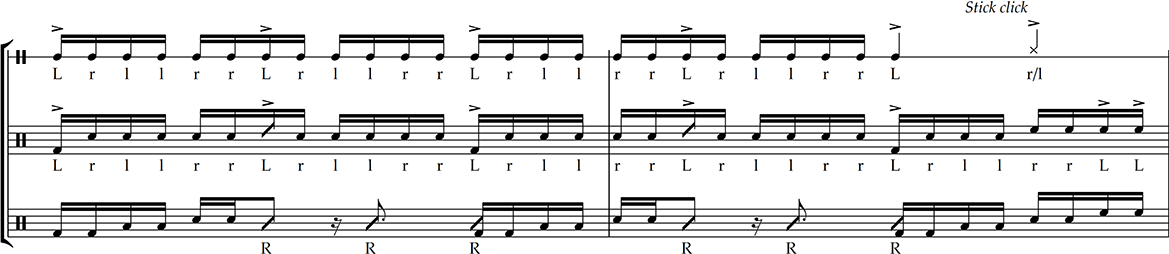
Show summary ▾ This exercise is from Kannapolis Independent Percussion (KIP) and it’s a great way to work on paradiddles with the drumline. This playlist include parts for the score, snare only, tenor only, and bass only. Use timestamps in the description to jump to a specific bpm and check out the Tips + Lessons for hundreds of tips on how to practice this exercise.
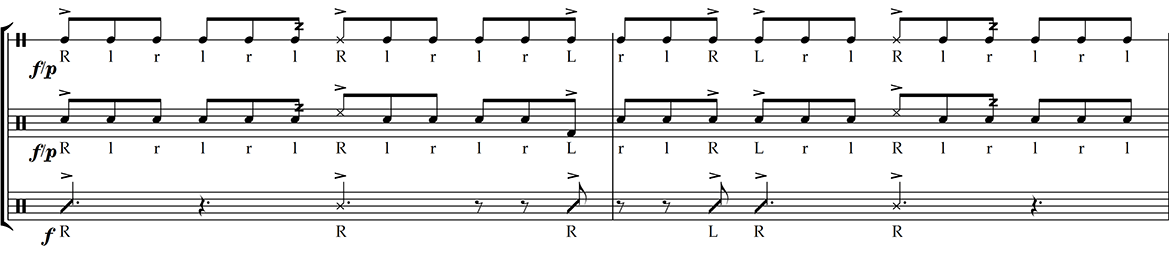
Show summary ▾ This exercise is from Kannapolis Independent Percussion (KIP) and it’s a great way to get your hands loose with the drumline. This playlist include parts for the score, snare only, tenor only, and bass only. Use timestamps in the description to jump to a specific bpm and check out the Tips + Lessons for hundreds of tips on how to practice this exercise.
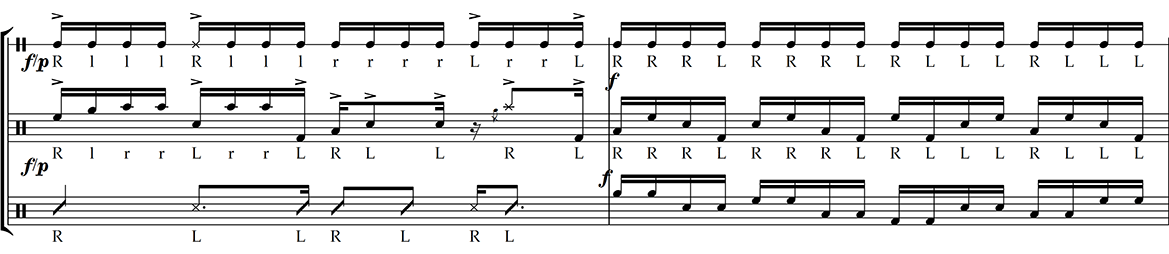
Show summary ▾ This exercise is from Kannapolis Independent Percussion (KIP) and it’s a great way to work on even sound when playing legato strokes through various stick control patterns with the drumline. This playlist include parts for the score, snare only, tenor only, and bass only. Note that there are multiple tenor splits for this exercise, each with their own unique score. Use timestamps in the description to jump to a specific bpm and check out the Tips + Lessons for hundreds of tips on how to practice this exercise.
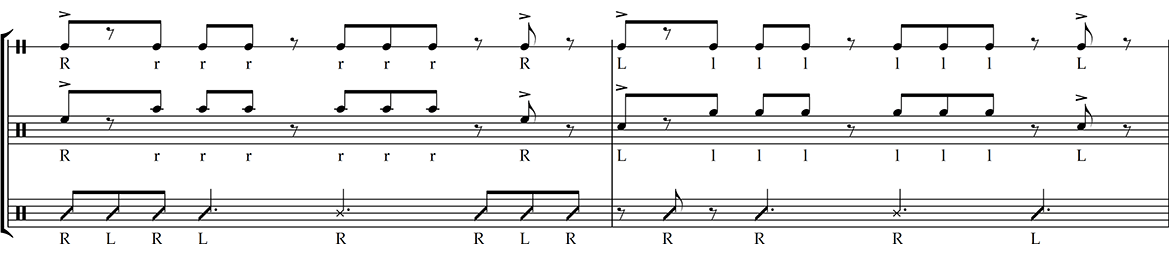
Show summary ▾ This exercise is from Kannapolis Independent Percussion (KIP) and it’s a great way to work on triplet partials both as legatos and accent taps with the drumline. This playlist include parts for the score, snare only, tenor only, and bass only. Use timestamps in the description to jump to a specific bpm and check out the Tips + Lessons for hundreds of tips on how to practice this exercise.

Show summary ▾ The exercises in this playlist are from the Kannapolis Independent Percussion (KIP) snare packet for the 2026 season. These exercises allow you to practice as if you were playing with the rest of the drumline, which will help you prepare for drumline auditions. Even if you’re not auditioning for KIP, the fundamentals in these packets are rock solid. Everyone could benefit from using them to improve their playing, no matter how long you’ve been drumming. Use timestamps in the description to jump to a specific bpm and see the Tips + Lessons section for hundreds of free tips on how to prepare for an audition, how to play relaxed, how to improve timing, etc.

Show summary ▾ If you are the copyright holder of the audition/exercise packet that your drumline uses and you’d like me to recreate them as play-alongs, reach out to me on LinkedIn (I have DMs turned off on every platform, but I figure trolls won’t message me through a LinkedIn profile). I would do this service free of charge to you. You’ll notice on my website that I don’t sell educational content through books, apps, courses, lessons, etc. My revenue model with the free content I create on YouTube is ad revenue. Combined, the thousands of free play-alongs I’ve been creating over the last few years pays me about a dollar a day as of 2026, but my goal is to eventually get to a teacher’s salary through YouTube ad revenue so I can continue to create free drumming resources.
Sight reading

Show summary ▾ These sight reading exercises improve your sight reading of rhythms (hence, you know, the name of this playlist). There are multiple difficulty levels for each of these exercises, each working on sight reading using research-based practices (my PhD is in music education) that I used when I taught general music classes, band, and percussion ensembles. The easiest variation of this exercise uses a "sound before sight reading" approach that plays a rhythm you hear first before echoing back the rhythm while displaying the western staff notation. The medium difficulty variation uses a "sight reading before sound" approach that teaches sight reading rhythms by displaying the rhythm before hearing (and playing) what they sound like. And the hardest variation uses a "sight reading ahead" approach that teaches you to read one measure ahead while sight reading by displaying the rhythm you're about to play while you play along with the previous measure that you just read. Each of these difficulty levels and variations are available with 8th notes, triplets, 16th notes, duple and triple meters, swung variations, and more complex rhythms to help you learn how to sight read rhythms. Use timestamps in the description to select a specific bpm and have fun with any of these exercises that improve your timing and sight reading!

Show summary ▾ This playlist focuses on foundational 8th note sight reading, helping you improve your real-time rhythmic processing and basic counting skills. These play-alongs are perfect for beginners or educators looking to solidify their grasp of simple meters and primary subdivisions. Use the timestamps in the description to practice at comfortable reading tempos, ensuring you read ahead of the beat and maintain a relaxed, consistent grip. Remember, the easiest variation of this exercise uses a "sound before sight reading" approach that plays a rhythm you hear first before echoing back the rhythm while displaying the western staff notation. The medium difficulty variation uses a "sight reading before sound" approach that teaches sight reading rhythms by displaying the rhythm before hearing (and playing) what they sound like. And the hardest variation uses a "sight reading ahead" approach that teaches you to read one measure ahead while sight reading by displaying the rhythm you're about to play while you play along with the previous measure that you just read.

Show summary ▾ The triplet sight reading exercises will challenge your ability to quickly interpret and perform triplet-based rhythms and rests without hesitation. Working through these play-alongs is crucial for developing a strong internal sense of triple meter and improving your swing or shuffle reading. Drop into the timestamps to find a tempo that challenges your eyes (and ears), focusing on keeping the underlying triplet rhythms consistent even when encountering complex syncopation. Remember, the easiest variation of this exercise uses a "sound before sight reading" approach that plays a rhythm you hear first before echoing back the rhythm while displaying the western staff notation. The medium difficulty variation uses a "sight reading before sound" approach that teaches sight reading rhythms by displaying the rhythm before hearing (and playing) what they sound like. And the hardest variation uses a "sight reading ahead" approach that teaches you to read one measure ahead while sight reading by displaying the rhythm you're about to play while you play along with the previous measure that you just read.

Show summary ▾ This playlist is designed to sharpen your 16th note sight reading chops, pushing you to instantly recognize and execute dense rhythmic groupings and syncopated partials. These exercises will massively improve your rhythmic vocabulary and reading confidence for 16th note passages. Utilize the timestamps in the description to practice at a manageable speed, making sure your sticking remains logical and your inner beats stay perfectly in time with the play-alongs. Remember, the easiest variation of this exercise uses a "sound before sight reading" approach that plays a rhythm you hear first before echoing back the rhythm while displaying the western staff notation. The medium difficulty variation uses a "sight reading before sound" approach that teaches sight reading rhythms by displaying the rhythm before hearing (and playing) what they sound like. And the hardest variation uses a "sight reading ahead" approach that teaches you to read one measure ahead while sight reading by displaying the rhythm you're about to play while you play along with the previous measure that you just read.

Show summary ▾ These advanced sight reading exercises feature complex rhythms, odd groupings, and challenging syncopations designed to test the limits of your reading abilities. Seriously. They’re hard, so don’t beat yourself up if you struggle with these variations. Practicing these play-alongs will prepare you for demanding concert band, orchestral, or drum corps literature. Use the timestamps in the description to slowly decode the rhythms, focusing on maintaining a strong internal pulse and accurate mathematical subdivisions. Remember, the easiest variation of this exercise uses a "sound before sight reading" approach that plays a rhythm you hear first before echoing back the rhythm while displaying the western staff notation. The medium difficulty variation uses a "sight reading before sound" approach that teaches sight reading rhythms by displaying the rhythm before hearing (and playing) what they sound like. And the hardest variation uses a "sight reading ahead" approach that teaches you to read one measure ahead while sight reading by displaying the rhythm you're about to play while you play along with the previous measure that you just read.

Show summary ▾ 12/8 meter look funny. Seriously, it’s confusing at times. But this 12/8 sight reading playlist helps you learn how to navigate dotted rhythms, duplets, and quadruplets within a triplet-based framework. These exercises are fantastic for improving your feel for marches and afro-cuban styles. Use the video timestamps to lock into the macro-pulse of the dotted quarter note, ensuring your reading stays smooth and musical across the barline. Remember, the easiest variation of this exercise uses a "sound before sight reading" approach that plays a rhythm you hear first before echoing back the rhythm while displaying the western staff notation. The medium difficulty variation uses a "sight reading before sound" approach that teaches sight reading rhythms by displaying the rhythm before hearing (and playing) what they sound like. And the hardest variation uses a "sight reading ahead" approach that teaches you to read one measure ahead while sight reading by displaying the rhythm you're about to play while you play along with the previous measure that you just read.

Show summary ▾ These swung sight reading exercises challenge you to apply a swing interpretation to written 8th note notation, testing both your reading skills and your stylistic feel. Perfect for jazz band preparation, these play-alongs will help you internalize the swung triplet subdivision. In fact, you could practice sight reading these with one or more limbs while playing an ostinato pattern to work on swung limb independence. Check the timestamps in the description to practice at different tempos. Remember, the easiest variation of this exercise uses a "sound before sight reading" approach that plays a rhythm you hear first before echoing back the rhythm while displaying the western staff notation. The medium difficulty variation uses a "sight reading before sound" approach that teaches sight reading rhythms by displaying the rhythm before hearing (and playing) what they sound like. And the hardest variation uses a "sight reading ahead" approach that teaches you to read one measure ahead while sight reading by displaying the rhythm you're about to play while you play along with the previous measure that you just read.

Show summary ▾ These swung sight reading exercises challenge you to apply a swing interpretation to written 16th note notation, testing both your reading skills and your stylistic feel. Perfect for jazz band preparation, these play-alongs will help you internalize the swung triplet subdivision. In fact, you could practice sight reading these with one or more limbs while playing an ostinato pattern to work on swung limb independence. Check the timestamps in the description to practice at different tempos. Remember, the easiest variation of this exercise uses a "sound before sight reading" approach that plays a rhythm you hear first before echoing back the rhythm while displaying the western staff notation. The medium difficulty variation uses a "sight reading before sound" approach that teaches sight reading rhythms by displaying the rhythm before hearing (and playing) what they sound like. And the hardest variation uses a "sight reading ahead" approach that teaches you to read one measure ahead while sight reading by displaying the rhythm you're about to play while you play along with the previous measure that you just read.
Technique

Show summary ▾ Technique creates relaxed, healthy hands and consistent sound quality. Technique is important for all percussionists to master, but it is SUPER important for rudimental drummers. Why? Watch this video. That’s why I recommend practicing 50-60% of your time on technique exercises in this section, 30-40% of your time on grid variations (they’re like technique exercises for your rudiments), and 10-20% of the time on chop exercises. If you’re not sure what to focus on when practicing these exercises, see the Tips + Lessons section for hundreds of free drumming tips.

Show summary ▾ The accent tap exercises form the bedrock of dynamic control and stick height management, training your hands to differentiate immediately between loud primary strokes and quiet inner beats known as “taps” on drumline and “ghost notes” on drum kit/set. Consistent practice with these play-alongs will eliminate tension in your downstrokes and prevent your taps from creeping up in height. Use the timestamps in the description to focus on your playing zones and ensure your taps/ghost notes stay at a strict, but relaxed and low height. If you’re unsure how to play relaxed accent taps, see the lessons at the top of this playlist and more in the Tips + Lessons section below.

Show summary ▾ Boston is a classic accent and tap exercise that presents some tricky upbeat syncopated accents. This playlist has many variations of the accent/tap pattern that incorporates different rudiments like flams, diddles, and other sticking patterns. Think of it like an alternative grid variation that uses a different accent/tap pattern.

Show summary ▾ This playlist focuses on cold attack rolls, forcing you to initiate double strokes instantly without the safety net of a check pattern. These exercises are super difficult on their own, but are essential for improving your roll entrances, timing, and initial sound quality. Take advantage of the timestamps to practice at various tempos, paying careful attention to your hand speed and ensuring the first diddle doesn't crush or slur out. See the video at the top of the playlist for more explanation of why rolls without check are so difficult to clean as a drumline.

Show summary ▾ The playlists above have classic drumline exercises like triplet diddle and 16th note diddle exercises like Gallop (or the extended version called “Rodeo”). These exercises are often easy to learn, but very difficult to master. See the videos at the top of the playlists for tips like how to fix the second note of the diddle from sounding weak or a special technique to play really fast drum rolls. There are tons of exercises in these playlists, so pick one that looks interesting and play slow and controlled using the timestamps in the description to jump to a specific bpm.

Diddle timing - Five stroke roll timing
Show summary ▾ The diddle timing and five stroke roll timing exercises are meticulously designed to fix rhythmic tearing and uneven double strokes by isolating the exact placement of each note of the diddle. These play-alongs will train your hands to produce open, relaxed diddles that perfectly match the underlying subdivision by intentionally going back and forth between slurred (slow), normal, rushed (fast), and normal diddles. See this video for a quick introduction to why these play-alongs will help you clean your drum rolls.

Show summary ▾ This double beat playlist focuses on developing the timing and strength of the second note of a diddle using a variety of double beat exercises. My favorite exercises for this are the diddle strength and three stroke strength exercises, which I talk about in this video. However, the Short Short Long double beats are a great way to work on your hand endurance/stamina. Use the timestamps in the description to push your tempo limits or to practice slow and controlled, focusing on letting the stick rebound naturally rather than muscling the second note out of the drum.

Show summary ▾ These double stop exercises are designed to perfect your hand-to-hand synchronization, ensuring your left and right sticks strike the drum head at the exact same millisecond and with the same velocity. This is a crucial workout for cleaning up diddles, three strokes, four strokes, and more. Utilize the timestamps to practice at different speeds, listening closely for any "flamming" sounds (indicating one hand is early/late or loud/soft compared to the other) and adjusting your stick heights and velocity to achieve a unified popping sound.

Show summary ▾ So you’ve mastered roll exercises and want to take it to the next level? This playlist can help. The dynamic rolls playlist challenges you to maintain perfect roll quality and diddle consistency while smoothly crescendoing and decrescendoing. These play-alongs are essential for concert percussionists and rudimental drummers looking to add musicality to their technique. Use the video timestamps to isolate the dynamic shifts, ensuring your stick heights change gradually and evenly while your rhythmic subdivision remains rock-solid.

Show summary ▾ I expect this playlist to be a popular playlist. It’s full of exercises that, you know, work on your endurance and speed. Hence the original name. This collection of exercises is designed strictly to push your physical limits, building the fast-twitch muscle fibers required for blazing hand speed (or foot speed) and long-term endurance. Whatever limbs you use to play these exercises, focus on playing as relaxed as possible. Tension slows down your drumming. Like. A lot. I talk about that in many of my videos in the Tips + Lessons section.

Fast-Slow-Fast - Slow-Fast-Slow
Show summary ▾ This drumming practice tool is designed to work on both your chops and technique. Simply pick what you want to improve (e.g., a rudiment), select a subdivision in one of the playlists that matches your rudiment, then pick a tempo range in the description of the video. The play-along will either gradually speed up (Slow-Fast-Slow) or slow down (Fast-Slow-Fast) one click at a time. The play-along will reach your final tempo, hold it for four measures, then gradually return to the starting tempo, moving one click at a time. This allows you to not only refine your technique while drumming, but to slowly push yourself to play a rudiment faster. Add this into your daily drum practice routine and you’ll notice huge improvements in a couple of weeks.

Diddle timing - Five stroke roll timing
Show summary ▾ The diddle timing and five stroke roll timing exercises are meticulously designed to fix rhythmic tearing and uneven double strokes by isolating the exact placement of each note of the diddle. These play-alongs will train your hands to produce open, relaxed diddles that perfectly match the underlying subdivision by intentionally going back and forth between slurred (slow), normal, rushed (fast), and normal diddles. See this video for a quick introduction to why these play-alongs will help you clean your drum rolls.

Show summary ▾ Flams are a very common rudiment that every drummer knows, but many misunderstand. There are not only a lot of exercises that can help you work on your flams (hence, this playlist), but there are actually many ways to play flams. For example, did you know that you can not only change the spacing of the grace note, but also the height to be at half the height of the primary note? If that sounds like blasphemy, watch this video.

Show summary ▾ This playlist could also be called “hand spacing,” but I don’t think people would know what I’m talking about if you haven’t seen my videos that talk about (here’s an example for playing fast three and four strokes). The fulcrum control exercises are hyper-focused on the subtle changes you make to control the timing and rebound when playing downstrokes and upstrokes. Working on these play-alongs will improve your finesse and unlock faster, more effortless control over not only accent/taps, but also your timing. These exercises can be played on one hand, alternating, or as double stops (both hands together). However you play them, use an efficient technique for the upstrokes and downstrokes that I talk about in this video. Another fulcrum control exercise at the bottom of this playlist called “Chug with flam accents and single-doubles” is similar to the exercise called “Fulcrum Freddy,” which switches from flam accents into quick single-doubles. All of these exercise look simple, but are difficult to master. Try them if you don’t believe me ,)

Show summary ▾ This playlist has a bunch of resources to help you improve your hybrid rudiments, combining standard rudiments into complex, brain-teasing sticking patterns that will test your mental and physical dexterity. The 100 Hybrid Rudiments in a Row play-along is one of the trickiest play-alongs on my website. Seriously. If you’re not an advanced rudimental drummer who can already play a bunch of grid variations and shopping sprees, I’d avoid this one unless you start at 40 BPM and have a lot of patience. Whatever play-along you choose in this playlist, it will help you refine your hybrid rudiments.

Show summary ▾ Jeepers is a classic accent and tap exercise based on the lyrics for “Jeepers Creepers” by Louis Armstrong. This playlist has many variations of the accent/tap pattern that incorporates different rudiments like flams, diddles, and even some shopping sprees with hybrid rudiments. Think of it as an alternative grid variation that utilizes a different accent/tap pattern.

Show summary ▾ The exercises in this playlist are from the Kannapolis Independent Percussion (KIP) snare packet for the 2026 season. These exercises allow you to practice as if you were playing with the rest of the drumline, which will help you prepare for drumline auditions. Even if you’re not auditioning for KIP, the fundamentals in these packets are rock solid. Everyone could benefit from using them to improve their playing, no matter how long you’ve been drumming. Use timestamps in the description to jump to a specific bpm and see the Tips + Lessons section for hundreds of free tips on how to prepare for an audition, how to play relaxed, how to improve timing, etc.

Show summary ▾ The exercises in this playlist are from the Kannapolis Independent Percussion (KIP) snare packet for the 2027 season. These exercises allow you to practice as if you were playing with the rest of the drumline, which will help you prepare for drumline auditions. Speaking of, the rest of the ensemble packets are in the Scores + Ensembles section. Even if you’re not auditioning for KIP, the fundamentals in these packets are rock solid. Everyone could benefit from using them to improve their playing, no matter how long you’ve been drumming. Use timestamps in the description to jump to a specific bpm and see the Tips + Lessons section for hundreds of free tips on how to prepare for an audition, how to play relaxed, how to improve timing, etc.

Show summary ▾ Paradiddles (Rlrr Lrll) have some kind of spell cast upon them to make them one of the most popular sticking patterns known to all drummers across the planet. Paradiddles are fun to play, but there are many exercises that you can play to work on them. This playlist highlights some of them. One of my favorites is Paradiddle Zoom Zoom, which breaks down and speeds up the different mechanics used to play paradiddles. Another one of my favorites are the Chug variations like “Chug with RLRRLLs and RLRRLLLLs.” That one really pushes your hands to the limit. Speaking of, watch this video if you want to learn how to speed up rudiments like paradiddles.

Show summary ▾ This playlist is dedicated to maximizing your rebound technique, teaching you how to let the stick do the work for you on every single stroke. These exercises are foundational for playing fast singles, doubles, and rudiments with minimal physical effort. You could use this exercise on the tenors to work on crossovers by doing double stop crossovers every other note or use it for drum kit by playing a repeated ostinato pattern with one limb and rebound on another limb. Another way you can use this is to work on your overall sound quality by having all strokes start and end up, with the upstroke being a direct result of the rebound and not lifting the stick. Practice this exercise with each hand/limb separately and together to try to match technique and sound quality. Also try practicing this exercise with different sticking patterns like singles, doubles, threes, fours, rlrrs, rll, rlrrll, etc. to have the sticking pattern move across the different rhythms (it gets wacky). Use the timestamps in the description to lock in a comfortable tempo, focusing on a relaxed grip and returning the stick instantly to the starting position after each hit. This exercise is also sometimes called "subdivision ladder."

Show summary ▾ The roll timing and interpretation exercises bridge the gap between technical diddle quality and musical phrasing, challenging you to adapt your roll speed to different subdivisions. These play-alongs will drastically improve your drumline and orchestral roll control. In fact, I argue in this video that metronomes are useless for improving the timing of your drum rolls, which is why I created exercises like these to help clean your rolls.

Show summary ▾ I wasn’t sure what to call these exercises, so my wife named them “zoom zooms” and it stuck. These exercises isolate the mechanics of complex rudiments by breaking them down into their component strokes and gradually layering complexity to build up the rudiment from a strong foundation. This is an incredibly effective way to build muscle memory and chop speed simultaneously. I talk about why this approach works in the videos at the top of this playlist.

Fast-Slow-Fast - Slow-Fast-Slow
Show summary ▾ This drumming practice tool is designed to work on both your chops and technique. Simply pick what you want to improve (e.g., a rudiment), select a subdivision in one of the playlists that matches your rudiment, then pick a tempo range in the description of the video. The play-along will either gradually speed up (Slow-Fast-Slow) or slow down (Fast-Slow-Fast) one click at a time. The play-along will reach your final tempo, hold it for four measures, then gradually return to the starting tempo, moving one click at a time. This allows you to not only refine your technique while drumming, but to slowly push yourself to play a rudiment faster. Add this into your daily drum practice routine and you’ll notice huge improvements in a couple of weeks.

Show summary ▾ Many world-class WGI and DCI drumlines like the Blue Devils are constantly switching back and forth between slow and fast rolls, often using two distinct heights (e.g., the fast roll is low and the slow roll is high). This playlist helps you practice that. It has many variations for both rolls and tap rolls so you can practice switching back and forth between difficult passages.

Show summary ▾ If George Lawrence Stone were alive today, he’d probably be a billionaire from his book Stick Control. Seriously, everyone recommends it and there’s a reason for it. Inspired by this legendary method book, these stick control exercises feature relentless sticking variations designed to build perfectly balanced hands (or feet if you play them with your other limbs). Practicing these permutations will improve your coordination, sound quality, rhythmic accuracy, and make you look like a really cool person that people will want to give free high fives to. The variations “with filler” are the exact same sticking patterns, but you fill in any repeating hands with the other hand. This creates interesting rhythms, but the main purpose is to ensure the hand that’s “filling in” doesn’t change the hand that’s playing the normal legato sticking pattern. You’ll see what I’m talking about if you try one of those variations.

Show summary ▾ Back when I used to march, three stroke rolls were super rare and four stroke rolls required a Master Poké Ball to catch. Nowadays it seems like every world-class drumline is playing not only fast three strokes, but four strokes that look impossible to play. The exercises in this playlist are designed to help you make the impossible possible and this video explains the technique I use to play them.

Show summary ▾ It doesn’t matter how long you’ve been drumming or what your primary percussion instrument is, you need to spend time practicing these timing exercises. These timing exercises are essential for percussionist looking to lock in their internal clock while marking time (or simply playing with others). Use the timestamps in the description to practice at different tempos, but slow these play-alongs way down if you really want to work on your timing. If you need extra help marking time to these exercises, watch this video.

Show summary ▾ If you’re having difficulty switching from one rhythm to another while playing or marking time, these playlists are designed to help. The “basics” playlist has fundamental (e.g., quarter, 8th, triplet, and 16th note) rhythms that help you develop a solid foundation for transitioning in and out of various rhythms. And the “all” playlist has some wackier rhythms like septuplets (sevenlets), 5:3 8th notes, and other goofy rhythms that modern bass drummers like to play. If you want to practice them, I’ve got you covered with this playlist.
Tips + Lessons

Show summary ▾ This playlist highlights answers to some of the hundreds of questions I've received during my drumming Q&A livestreams. Think of these livestreams as my virtual "office hours" where I practice things I'm not good at (yet), while I answer questions that appear in the chat. When answering these questions, I draw on a wide range of experiences as a performer, educator, and scholar who has been drumming since 1998, taught every grade Kindergarten through doctoral student since 2003, and has conducted research in the fields of music education and computer science education. If you want to learn more about my professional background, here's a link to my CV. If you ever have a question about performing or teaching that you'd like me to answer, feel free to ask it in the chat during a livestream or as a comment on any of my videos.

Show summary ▾ Think of these livestreams as my virtual "office hours." Most of the time, you'll catch me grinding for XP by practicing things I'm not good at (yet). Whether I'm pushing my chops, learning difficult limb independence variations, or trying to speed up my feet on the double kick, I want to show you what practicing can look like. But while I’m practicing, I always keep an eye on the chat so I can answer questions about how to get better as a performer or as an educator. If you ever have questions about improving your own technique, navigating life as a performer, or growing as a music educator, please stop in and say hello! When I answer questions, I draw from my experience as a percussionist (I've been playing rudimental and concert percussion since 1998) and as an educator who has taught every grade kindergarten to doctoral student in both music education and computer science education contexts. Whether you're a total beginner picking up sticks for the first time or an advanced player hitting a plateau, I'm happy to help however I can. Feel free to drop a question in the live chat or leave a comment on the VoD after the stream is over. I frequently edit the Q&As and add them to the "Drumming Tips" playlist, which has hundreds of videos to help you improve as a performer and educator.

Show summary ▾ This page includes method books, solos, and more that I recommend for drum kit, rudimental, and concert percussionists. These books range from beginner through advanced percussionists. The page also includes the gear I use in all of my livestreams and YouTube tutorials (e.g., drum heads, sticks, cymbals, cameras, microphones, etc.).

Show summary ▾ In this video, I share a deeply personal and important research paper I wrote in 2017 addressing the prevalence of depression and suicidality among students, and how music educators can better identify warning signs to provide crucial support. Drawing from my own experiences where practicing rudimental percussion and taking drum lessons literally saved my life, as making music served as a coping mechanism to work through severe depression. While my channel is widely known for offering free drumming lessons, drumming play-alongs, and comprehensive drumming tips, this presentation takes a step back from the physical instrument to focus on the emotional well-being of the human beings behind the kit. Through candid statistics and vignette, I highlight the stark reality that over one in three teachers who responded to a survey knew at least one student who has completed suicide, yet many feel paralyzed to act. I explore how the high-pressure culture of music education can sometimes exacerbate mental health risks, but also how establishing a supportive, communicative environment can quite literally save lives. By understanding the risk factors, avoiding toxic instructional habits, and knowing how to connect students with mental health professionals, I believe music educators can create a profoundly positive impact. If you are struggling with the mental side of drumming, looking to prevent drumming burnout, or trying to learn how to stay motivated drumming through difficult times, please know that you are not alone; my channel offers hundreds of resources to help, but if you or someone you know is ever in crisis, please dial 988 in the United States to reach the Suicide & Crisis Lifeline.
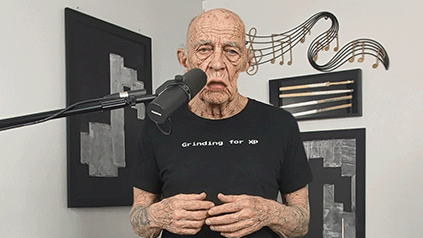
Show summary ▾ I used to hear my DCI marching snare drum instructors complain about getting "old man hands" and losing their drum chops as they aged, but while getting my PhD in music education, I discovered that declining drumming technique is actually caused by a lack of a consistent drum practice routine rather than growing older. Research suggests that with just ten hours of practice a week, drummers can maintain their hand speed and even improve their snare drum skills well into their 60s and beyond. I experienced this "use it or lose it" reality firsthand when my own rudimental drumming abilities faded during grad school, but I was able to completely rebuild my chops by getting back on the practice pad regularly. Whether you are trying to learn how to drum faster, get back into drumming after a long break, or simply maintain your stick control as you age, the secret is dedicating time to an intentional drum practice routine that focuses on your weaknesses rather than just playing what you already know.
Show summary ▾ I almost quit playing drums in the mid-2000s because of severe drumming injuries like tendonitis and early carpal tunnel, but I learned how to fix my drum technique to play completely pain-free. In this video, I share my exact process for finding the hidden tension in your drum grip that causes wrist pain from drumming, proving that learning how to relax your hands is the ultimate secret to how to drum faster and build better chops. To keep my forearms, hands, and fingers healthy, I walk you through my daily hand stretches for drummers and a targeted massage routine designed to relax your hands. Finally, I break down the best active recovery techniques for drummers to use after an intense practice routine, including post-drumming reflection, hydration, anti-inflammatory snacks, and rest strategies like icing and elevating your arms to eliminate swelling. If you want to stop drumming pain and improve your speed, this video has all the essential drumming tips and lessons I use to stay healthy behind the drum kit and drum pad.
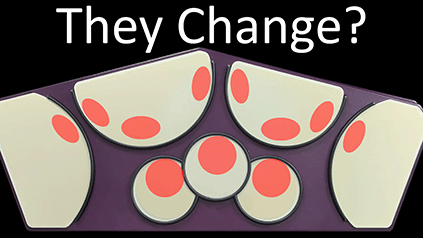
Show summary ▾ In this tenor drumming tutorial, I break down the essential differences between snare and quad playing zones to help you increase your speed and efficiency when moving around the tenor drums. You will learn how to drastically shorten the distance between drums, while maintaining a resonant tone on quads. I also cover critical marching percussion techniques, including the windshield wiper motion for moving around the drums, changing the playing zones for smoother sweeps/scrapes between drums, as well as proper mechanics to prevent injury and ensure your tenor drumming sounds world-class.
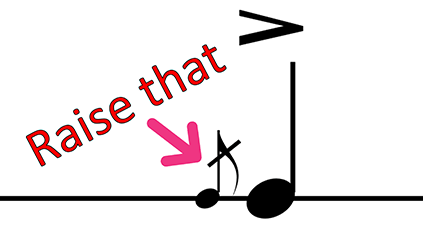
Show summary ▾ Master the complexity of flams with this essential drumming technique lesson. I break down this crucial drum rudiment, focusing on how to properly control the height and spacing of the grace note relative to the primary note for a clean, professional sound. Learn the nuances between flat flams and open flams and discover how the choice of flam type is dictated by the size of the instrument (e.g., snare drum vs marching bass drum) and the musical context. To help you achieve a perfect flam, I provide simple yet effective flam exercises and drumming drills designed to build consistency and take your drumming to the next level.
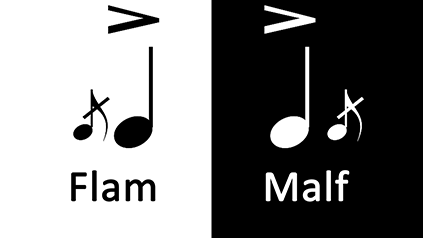
Show summary ▾ I challenge you to melt your brain and rethink your snare drum practice routine with "malfs," which are essentially flams played backward. Instead of playing the grace note right before the primary note for that classic "cha" sound, try playing the grace note immediately after the primary accent. This unique snare drum challenge is an incredible way to master rudiment control, especially when you plug malfs into your favorite flam exercises or marching percussion grid variations without accidentally raising your grace note heights. If you are ready to feel like a beginner all over again, try applying this backward drumming technique to my thousands of play-along tracks on this page, and be sure to dive into my other drum lessons covering everything from ruffs and ghost accents to the precise timing of your flam technique.
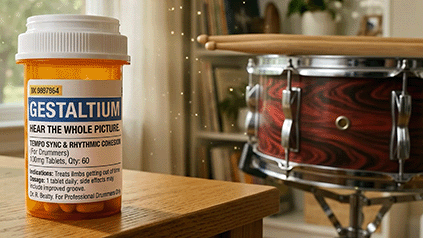
Show summary ▾ Are you struggling with how to mark time while playing syncopated rhythms and off-beat accents? In this fake prescription commercial, I introduce "Gestaltium," a conceptual drumming technique passed down by drumline instructors to cure TICK: the sudden inability to keep your feet in time during complex drumming. Instead of guessing, I explain how to improve your rudimental drumming and rhythmic independence by treating your hands and feet as a composite rhythm, which helps you easily master tricky second partial accents and improve your overall percussion timing. If you want to build your drum chops, fix your marching band timing issues, and avoid the hilarious side effects of this fake condition, watch this spoof commercial and then visit my channel's home tab for thousands of free drumming tips, percussion lessons, and comprehensive timing exercise playlists!
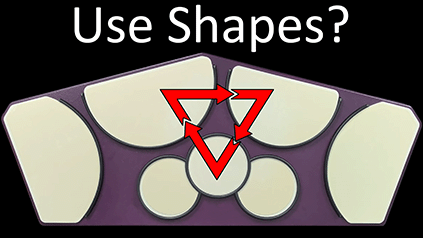
Show summary ▾ Struggling to find sheet music for quads? This video explains how to transform snare drum exercises into infinite tenor splits to expand your marching percussion vocabulary. Learn to adapt accent tap and flam exercises by isolating accents and taps to different drums to practice crossovers, improve your stick control moving around the drums with different patterns and shapes, or challenge yourself with different scrapes and sweeps while playing rolls. Whatever patterns you come up with, make sure you practice each pattern until it feels comfortable.

Show summary ▾ Want to learn a step-by-step process for developing limb independence? This stream highlight explains exactly how I have developed (and continue to develop) limb independence on drum kit. I outline a seven-step process that uses all of the free limb independence resources on this page. You don’t need to sign up for a course to learn how to do limb independence, you just need to practice these steps to develop limb independence over time. The video also includes several limb independence variations for styles like jazz, latin, rock, and more.
Show summary ▾ Learn how to drum louder without sacrificing speed by mastering the physics of velocity and stick grip in this drum lesson. Many players mistakenly believe that using more muscle or arm motion creates power, but this often leads to rigid drumming technique and fatigue. This video demonstrates how increasing the speed of your drum stroke straight into the head is more important than how high you play to generate volume. I also discuss why squeezing your sticks too tightly absorbs kinetic energy. By refining your hand technique to relax your grip and maximize energy transfer, you can achieve powerful drum dynamics and projection while preventing injury.
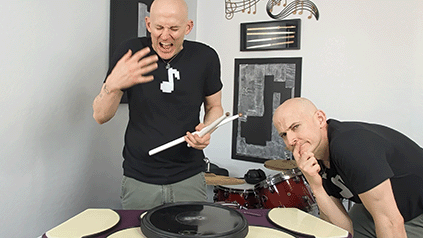
Show summary ▾ If your hands hurt after playing drums, it's likely a problem with your drum technique. I'll show you how to find the exact source of your hand pain from drumming by testing your drum grip and identifying where you are squeezing the drumsticks too tightly. I will show you how to fix and prevent repetitive stress injuries like tendonitis and carpal tunnel by playing with a relaxed grip, using stick rebound, and distributing the workload across your fingers, wrists, and forearms. You will learn why holding tension is like hitting the brakes on a car, and how adjusting your drum mechanics to relax your hands will not only keep you pain-free, but also help you play drums faster and with fluid motion.
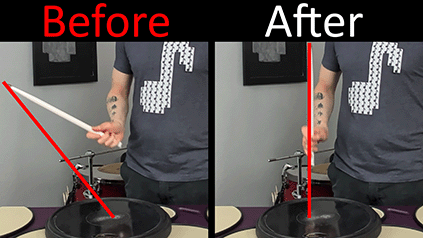
Show summary ▾ Discover how to fix slicing on drums and instantly improve your sound quality by mastering the mechanics of a straight drum stroke. In this drum lesson, I demonstrate why hitting the drum head at an angle reduces power, rebound, and playing zone accuracy. I break down actionable drumming tips to correct your hand technique, including using a mirror and a marker to visually track your drum stick's path, recording slow-motion video for analysis, and setting up physical guides on your drum pad to train yourself to play with a consistent vertical motion for superior stick control and drumming consistency.
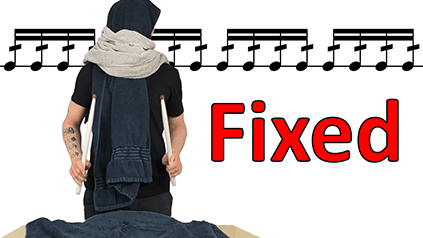
Show summary ▾ Improve your drum rolls and build serious chop strength by fixing weak sounding diddles with these essential drumming techniques. Instead of relying on bounce, learn how to master the double stroke roll by practicing on soft surfaces like a towel to build your drumming endurance and speed. I share free exercises that you can practice to fix hand inconsistencies and perfectly time the second note of your diddles

Show summary ▾ This unique stick control technique is perfect for drummers who want to improve their tap sound quality and overall drum technique. I learned this simple yet effective drumming exercise at the Santa Clara Vanguard drumline auditions many years ago and have taught it for decades to help drumming students enhance their drumming chops, technique, and stick control. Does it look funny? Yeah. Does it work? OH YEAH! Try it out for a couple of minutes as a drumming warm-up before tackling any of the thousands of free drumming exercises in on this page.

Show summary ▾ Unlock the secret practice tool used by elite athletes to boost your drumming skills anywhere, anytime: mental imagery! This mind practice technique is proven to be highly effective for drummers, improving your drumming timing, drumming technique, and consistency by up to 80% without a drum kit. Learn how to visualize drumming, feel the sticks, imagine the rebound, and even speak rhythms to enhance your silent drumming practice sessions. Discover how to practice drumming in your head to make real progress, identify mental mistakes, and take your drumming to the next level, even when you're away from your drums!
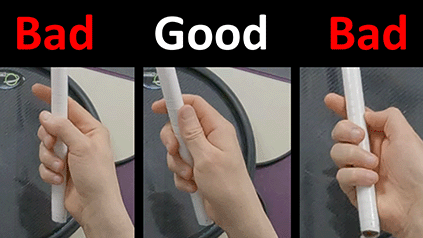
Show summary ▾ Want to master the art of drumming? In this beginner-friendly drum lesson, we dive into the essential skill of how to hold drumsticks properly. Learn the secrets to achieving more drumming speed, power, and endurance by understanding the ideal drumstick grip. Discover the fulcrum point for optimal bounce, how to relax your hands for smooth playing, and the key differences between German grip, French grip, and the versatile American grip. We’ll explore drumming techniques for beginners, provide valuable drumming tips on avoiding tension and injury, and guide you towards effective drum practice using stick control variations and accent tap exercises. Whether you're just starting your drumming journey or looking to refine your drum grip technique, this video is for you! Check out my channel's home tab for thousands more free drumming lessons and exercises to improve your drumming. Let’s level up your drumming basics together!

Show summary ▾ Learn essential traditional grip drumming techniques in this comprehensive tutorial, covering proper drumming posture, optimal stick grip and finger placement for maximum control, and effective drum height and angle adjustments to prevent tension and improve sound quality. Discover how to utilize forearm rotation, finger dribbling, and arm motion for varying dynamics, from fast taps to powerful accents, and understand the importance of consistent drumming technique for a uniform sound. Enhance your skills with practical drumming exercises, including technique drills, grid variations, and chop exercises, designed to build speed, endurance, and musicality, all while focusing on a relaxed and efficient drum stick technique. Whether you're a beginner or seasoned drummer, this guide helps you master the nuances of traditional grip, improve your drumming rudiments, and achieve a professional drum sound.
Show summary ▾ Whether you're a self-taught drummer trying to figure out how to practice drums without paying for expensive private drum lessons, or you've got multiple degrees in music, this guide will help you improve your drumming technique without ever having to pay for lessons or signup for a course. In this video, I explain how to build a highly effective drum practice routine by recording yourself and analyzing your playing in three ways: listening blindly for things like sound quality and timing accuracy, watching on mute to check for technique inconsistencies like with your grip and stick heights, and evaluating how your hands and body feel when playing things like rudiments or fast drum chops. You will then break these analyses down into a prioritized list of drumming goals that you can use to identify your own mistakes, fix inconsistent flams, improve your snare drum technique, build better speed and control, and more for free.
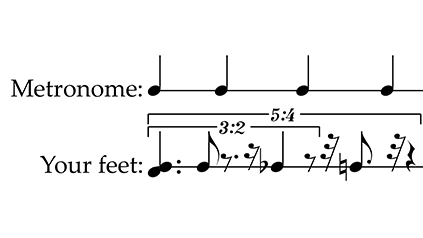
Show summary ▾ Do you struggle to keep your feet in time while your hands are locked in with the metronome? In this drum lesson, I break down a simple, step-by-step method to improve your hands and feet coordination for marching percussion. By starting your metronome practice at 80% tempo and actively stomping to the beat, you will learn how to internalize the pulse and sync your drumming with marking time. I cover a progressive drum exercise routine that takes you from mentally visualizing the music and singing rhythms to isolating your wrists and finally playing with your drumsticks. Whether you use drum kit pedals or just stomp to hear the beat, these tips will help you stay perfectly in time. Master your internal clock and eliminate autopilot feet so you can march and mark time with total confidence!
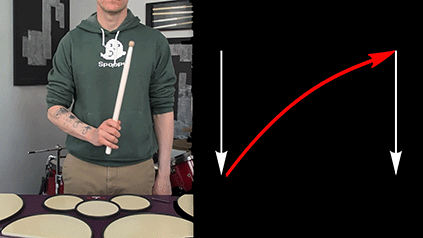
Show summary ▾ Improve your tenor drumming speed and flow by adopting a 'shifting' technique originally used for marimba. This method focuses on timing your lateral movement with the stick rebound to prevent slicing and improve your playing zones. I also break down a drumline exercise called "Rebound" that helps you isolate and speed up your elbow motion for shifting between drums to help you execute cleaner movement around the tenor drums.
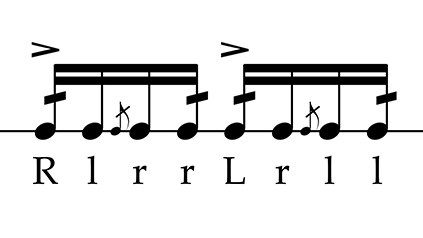
Show summary ▾ In this snare drum tutorial, I break down how to play the "book report" hybrid rudiment step-by-step, starting with a basic paradiddle sticking and gradually adding diddles and flams to build your marching percussion chops. Learning complex drum rudiments requires a lot of stick control; especially when keeping the taps low. So I recommend practicing these rudimental drumming exercises at a slow tempo, focusing on controlled taps and distinct accents, and utilizing the play-alongs in my "Rudiment Builders" playlist to gradually increase your speed one click at a time. Whether you are looking for new drumline warmups, challenging book report grid variations, or just want to improve your rhythmic precision, you can chop out and practice along with the thousands of free drum play-along tracks on my channel using the timestamps to find the perfect BPM range for your daily drumming routine
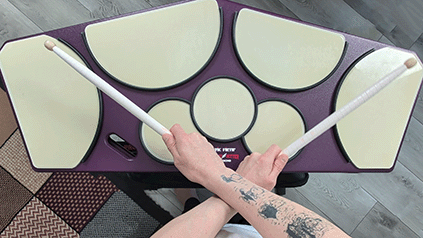
Show summary ▾ Mastering crossover techniques on tenor drums requires more than just avoiding stick clicks; it is about optimizing your flow and sound quality. In this quad drumming tutorial, I break down why stick-over-stick and hand-over-hand crossover methods often lead to weak sound quality or bruises, and instead introduce the fulcrum crossover for drums that are close to each other and the wrist-over-wrist approach for wider drum reaches. Whether you are refining your drumline chops in a marching band or are jamming out on drum kit, the drumming tips and free exercises I share will help you play crossovers with ease.
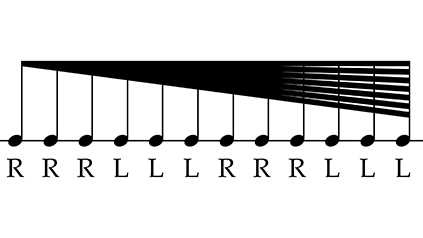
Show summary ▾ Ever wonder how your favorite drumlines play fast (and clean) three strokes? What about four strokes? They're not stroking each note with their wrists or fingers, they're using one stroke with multiple controlled rebounds. While manual legato strokes are fantastic for building overall stick control, I break down why transitioning to controlled rebound strokes is the ultimate secret to unlocking maximum drumming speed. Whether you prefer playing with traditional grip or matched grip (including variations like French grip, German grip, and American grip) I explain how to properly accelerate your drum stick rebound without relying on the drop/catch method. By teaching you how to manipulate the negative space within your hand to control the exact number of bounces, I will help you refine your snare drum technique and eliminate messy sounding threes and fours. Finally, I share free drum exercises and sheet music to help you speed up your three and four stroke rolls.
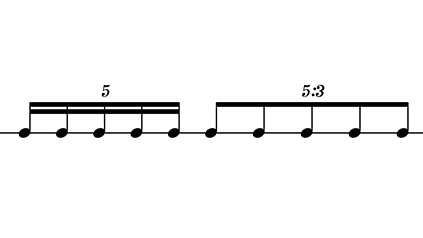
Show summary ▾ In this drum lesson, I break down how to understand and practice weird drum subdivisions like quintuplets and complex ratio rhythms that are popular among top DCI and WGI drumlines. I'll show you a powerful practice routine where you transition smoothly between familiar subdivisions (like quarter notes, eighth notes, triplets, and sixteenth notes) and trickier odd rhythms to truly test your internal clock and rhythmic accuracy. To take this drum pad workout to the next level, I explain how you can apply standard sticking rudiments like diddles and paradiddles over the changing time values, or even use an ostinato pattern with these free exercises to build extreme limb independence on the drum set. Whether you want to master complex time, improve your stick control, or just challenge your drumming chops with a tricky timing workout, this video gives you the exact blueprint to confidently play any crazy rhythm you encounter in any of the thousands of free drumming play-alongs in my YouTube channel's home tab or here.
Show summary ▾ Improve your marching percussion technique and play with a more relaxed, fluid feel by mastering the four essential drumline stroke types: downstrokes, upstrokes, and high or low legato strokes. In this rudimental drumming lesson, I break down the classic two-height system of accents and taps, explaining how to analyze your stick control based on where each stroke starts and ends. By understanding whether a pattern requires an up-to-up, up-to-down, down-to-down, or down-to-up motion, you can eliminate stiffness and figure out exactly how your hands should move when reading sheet music. Using a popular drumline warmup like Cheezy Poofs as an example, I demonstrate how analyzing the stroke types for each hand individually can instantly improve your visual fluidity and playing efficiency. Finally, I cover essential practice tips for applying these motions to your daily routine, including a crucial warning about why over-isolating your hands can actually hinder your overall drumming technique and your ability to speed up drum rudiments.

Show summary ▾ Discover how to practice drums quietly and effectively with these essential tips for silent drumming! Learn techniques to improve your drumming skills without disturbing others, including wrist stamina exercises like forearm clapping and doorknob rotations for traditional grip. Explore quiet chop-building methods using soft surfaces like pillows and carpets, and find out how to mute your drum kit with towels or low volume drum heads and cymbals. Plus, learn how to enhance your dynamic control by challenging yourself to play as quietly as possible. Perfect for home practice, apartment drumming, and anyone looking for quiet drum practice solutions!
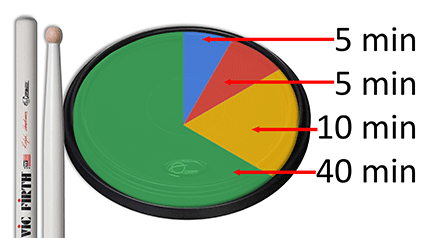
Show summary ▾ If you want to know how to practice drums efficiently, I am breaking down my ideal one-hour drum practice routine designed to maximize your drumming progress while prioritizing physical recovery and performance longevity. I always start with a quick 5-minute drum warmup just to get the blood flowing, followed strictly by 5 minutes of targeted forearm and hand stretches. This daily routine keeps my hands healthy and prevents drumming injuries. For the core 40 to 45 minutes of the practice session, I focus heavily on methodically refining just one or two specific goals, like slowing down drum rudiments to 40 bpm for better sound quality, mastering stick control, or working on new limb independence patterns on the drum kit. Finally, I spend the last 5 to 10 minutes rewarding myself by playing something I love and chopping out on drums, which ensures I'm always excited for the next session. Whether you have hours to play or just 30 minutes a day, I will show you how scaling this approach is the ultimate secret to building faster drum chops and better overall drum technique without wasting time or burning out.
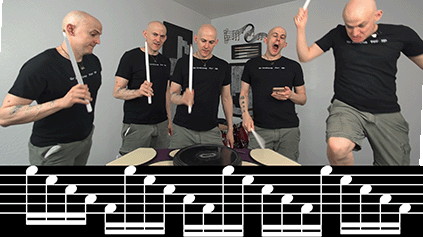
Show summary ▾ If you want to march bass drum for a world-class drumline, you need to be able to simulate playing on a bass line when practicing on a drum pad. This video walks through hundreds of marching bass drum play-alongs I've created to simulate what it feels like to play on a competitive bass line. First, you will hear the full ensemble with a built-in metronome to help with marking time; next, I mute your specific drum so you can fill in the rhythmic holes just like a real performance; and finally, I isolate only your part so you can lock in your accuracy against the audio that has perfect rhythmic interpretation. Whether you are working on standard 8th notes, 32nd note hand-to-hands, or challenging laser beams across the drums, I've included timestamps allowing you to slow the BPM down to 20 and gradually speed up, giving you the ultimate system to level up your marching bass drumming skills at home.
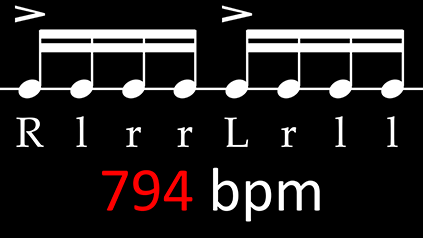
Show summary ▾ Learn how to break through speed barriers and play rudiments faster by shifting your mental focus from individual stickings to note groupings, effectively "reading" drum rudiments and patterns like words instead of letters. This drum lesson explores the mechanics of speed, explaining why isolating hands can actually hinder your progress and how breaking down patterns like paradiddles into mechanical groups—such as alternating hertas—can drastically increase your BPM. You will also discover a drumming practice routine that's like progressive overload for drummers, starting with slow, relaxed technique at 40 BPM and gradually building up to your maximum tempo to ensure consistent sound quality and control for every drummer looking to master their hand speed
Show summary ▾ If you are wondering how to become a better drumline instructor, getting your teaching reps in is just as crucial as it is for learning how to become a better drummer. I developed my skills for cleaning a drumline without needing a live ensemble by actively analyzing drumline lot clips and marching percussion rehearsal videos on YouTube. Instead of passively watching, I would pretend to teach the group, providing mental feedback on inconsistencies in technique, rigidity, velocity, etc. With rehearsal and sub-sectional clips, I can compare my internal feedback to the actual drumline instructor tips heard in the sub-sectional footage. This method of asking critical questions about teaching priorities, communication styles, and technique allowed me to mentally practice how to teach drumline from anywhere, whether I was driving or doing chores. You can easily apply this strategy to elevate your own percussion education skills by studying world-class ensembles, observing drumming tutorials, and exploring my own drumming tips and lessons to master the art of teaching percussion!
Show summary ▾ Are you struggling to improve your drumming speed or drumming technique? What's holding you back might be 1) what you're practicing and 2) how you're practicing. Watch this video to learn why I look like a beginner when I'm practicing; despite having played the drums for decades. The drumming practice tips I'll share will help you refine your drumming control and drumming accuracy, preventing bad habits and improving your overall drumming consistency. Discover how to level up your drumming skills by focusing on effective drum practice routines and avoiding the "XP grind" trap of endlessly repeating easy drum exercises you can already play. Whether you're a beginner drummer or looking to break through a plateau, this quick guide offers insights into drumming fundamentals and advanced drumming techniques for sustainable drumming improvement.
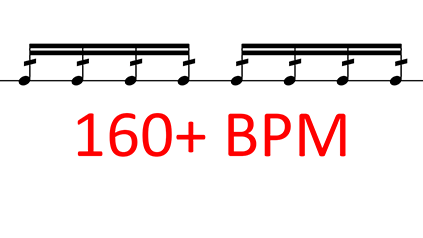
Show summary ▾ If you want to learn how to play extremely fast drum rolls, you need to learn an advanced drum technique that uses a controlled rebound stroke combined with a unique forearm-pumping motion. When standard wrist and finger movements max out, this pumping method helps you push your speed limits by controlling your downward stroke and hand spacing to accelerate the second note of the diddle. Although I highly recommend balancing this specific pumping technique with plenty of slow, controlled drum practice to build a well-rounded foundation, you can practice this (or any) technique with the thousands of free exercises and drumming tips on this page.

Show summary ▾ I went from center snare to end snare for two different drumlines. One of the times was my choice and the other is a bit more dramatic. Both experiences taught me lessons that I hope can help you become the center or section leader one day. Shout out to everyone I've marched with over the years (especially Matt for waking me up lol)!

Show summary ▾ Are metronomes making your drumming sound robotic and unnatural? Or do they end up giving you a false sense of timing? While metronomes can serve as useful guideposts for the start and end of a rhythm or phrase, the real challenge for drum timing and rhythmic precision lies in accurately interpreting the notes between each click, which only gets harder the more people you play with. So how can drummers improve their timing and develop better musicality without the common problems associated with metronomes? Since finding another drummer with perfect rhythmic interpretation is unrealistic, I've created a solution: thousands of free drum play-alongs available on my YouTube channel's home tab. These play-alongs have timestamps to jump to specific BPMs and are designed to help you improve your drum chops, limb independence, and overall drumming skills, offering a practical alternative for drum practice and rhythm training.
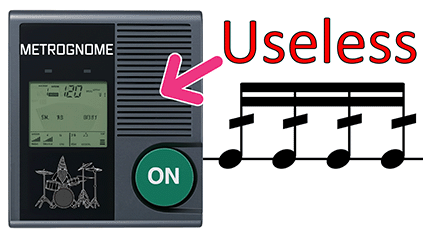
Show summary ▾ Practicing with a metronome won't automatically give you clean drum rolls. If your rolls sound dirty, it is usually because your diddle timing is slightly off. In this video, I'll show you how to fix your dirty sounding rolls by intentionally practicing slurred and rushed diddles to help you master your diddle interpretation. By slowly playing along with the free five stroke roll timing exercise, you will develop the ear and control to play your diddles and rolls perfectly in time.

Show summary ▾ Use this dictionary to figure out what percussion instrument you are supposed to play or what the composer is asking for. Almost all of the definitions are very short and to the point.
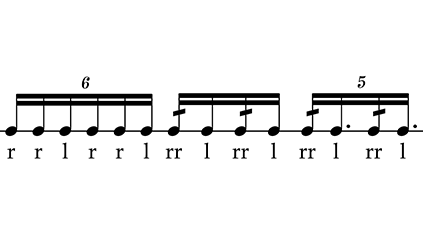
Show summary ▾ In this drum lesson and play-along exercise, I break down a weird practice routine designed to help you master drum roll interpretation and build clean, consistent double stroke rolls in just one hour. By deliberately contrasting slurred diddles, rushed diddles, and perfectly spaced diddles across both your right and left hands, I’ll show you how to lock in precise rhythmic timing and stick control for snare drum, marching band, and drumline settings. Start slowly at 40 BPM to expose micro-timing flaws between note subdivisions, then gradually ramp up the metronome tempo to 100 BPM (or more) so you develop the ear training and hand speed required to play clean rolls and tap rolls effortlessly. The Roll Interpretation exercises are found in the Technique section of my YouTube channel's home tab in the "Rudiment Builders" playlist or neatly organized here.
Show summary ▾ If you want to know how to become a professional drummer, you have to stop treating social media as your daily drum practice routine, because endlessly scrolling through flashy snare drum breaks and tutorials on how to play faster singles will not actually help you land a gig. As an award-winning percussionist and educator with a PhD in music education, I see too many players falling for the false hope of "easy secrets" and "drum hacks the pros don't want you to know," when the reality is that building your drum chops requires treating your practice time like a balanced diet rather than just consuming the digital desserts. Although I've created hundreds of drumming tips and drum lessons to help you improve, knowledge is only 1% of what you need to get better. The other 99% comes down to putting in the years of hard work to turn your weaknesses into strengths. So if you actually want to improve, you need to spend less time swiping and more time actively practicing so you can truly improve your drumming. If you're looking for free exercises to practice, there are thousands on this page.

Show summary ▾ If you're considering Offworld's Invader V3 drum pad, this review will help you decide between the pad with and without the VML laminate. The pad without the laminate offers a more resonant sound, while the VML laminate provides enhanced articulation and a sharper attack, making it easier to identify mistakes during practice. The Invader V3 is durable, withstanding years of practice without significant wear. Its built-in rim ensures long-lasting performance, and the pad’s non-slip Dark Matter bottom adds stability. While the laminate version is louder, it closely mimics a snare drum's feel, unlike softer, quieter options like RealFeel pads. Despite its size, which might be challenging for smaller backpacks, the Invader V3 is highly recommended for its longevity and excellent customer support from Offworld. This review is based on personal experience and is NOT a paid sponsorship.

Show summary ▾ In this video, I dive into a comprehensive review of Vic Firth's NEW Quadropad with rims and laminates. I explore the feel and performance differences between playing with and without laminates, highlighting how the mylar laminates enhance articulation and sound quality. I discuss the new rim design, which closely simulates real tenor drumming, and address the benefits of the built-in, non-slip padding that keeps the pad stable during play. Additionally, I explain why the lack of tone holes improves sound consistency across the drums, making the Quadropad an excellent choice for serious practice. Whether you're considering the large or small version, I provide insights into the durability and design improvements that make this pad a worthwhile investment for any percussionist. This review is based on personal experience and is NOT a paid sponsorship.
Show summary ▾ In this drum lesson, I share the concepts I've learned from world-champion drum instructors about mastering matched grip to maximize both drumming speed and power. I break down my relaxed, wrist-based drum technique, demonstrating exactly how to hold drumsticks using a three-part fulcrum (also known as a "triangle fulcrum") with the thumb, index, and middle fingers for ultimate drum stick control. I also explain how to utilize your back fingers to manage stick spacing and rebound for legato and downstrokes, and discuss why I prefer American grip over French or German grip variations. Finally, I share why I've added rotation to my matched grip technique in a way that combines traditional wrist-knocking motions with a timpani-inspired rotation, allowing me to play drums faster and achieve an efficient, powerful, and consistent sound quality without adding tension to my playing.
Show summary ▾ Unlock your true potential as a percussionist by understanding the tradeoffs behind different drumming mechanics. In this comprehensive drum lesson, I explore why there is no single "correct" way to play and how every approach comes with specific affordances and constraints. Whether you are comparing traditional versus matched grip, analyzing marimba grips like Stevens and Burton, or adjusting your hands from a German to a French grip, musical context is everything. I break down why specialized motions might be perfect for navigating large leaps on a drum kit or multi-percussion setup, but could lead to inconsistent sound quality on marching tenor drums. I also tackle how to avoid "technique dogmatism" and the pitfalls of the "apprenticeship of observation" when learning from social media drummers who prioritize flashy gimmicks over solid sound. Focus on essential drum fundamentals, keep your hands relaxed with efficient motion, and discover how to choose the right technique for your specific scenario.
Show summary ▾ If you want to know how to make a snare line in high school, college, DCI, or WGI, you need to rethink your drumline practice routine and stop focusing on flashy stick tricks and snare breaks. As a former center snare and percussion caption head, I know firsthand that marching percussion instructors care far more about your consistency to play clean as a performer than how many complex snare breaks you can play. In this video, I share the rudimental drumming secrets I picked up during my drum corps career and from world-class educators, emphasizing why breaking down mechanics at slow BPMs is crucial for your performance ability. To help you nail your next snare drum audition, I break down exactly what to practice, recommending a strict diet of fundamental technique exercises and grid variations while marking time, with a sprinkling of chop exercises to keep things exciting.
Show summary ▾ This playlist includes all of the tenor-related drumming tips and lessons in one space. Want to learn how to play speed up moving around the drums? This playlist can help. Curious why tenor heads need to be tuned more than other drums? I’ve got a video on that. Unsure how to play crossovers? I’ve got you covered.
Show summary ▾ In this advanced snare drum lesson, I break down how to play Float flam drags, a unique five-note drum rudiment named after DCI Hall of Fame drumline instructor Tom Float. I share a quick story about accidentally meeting Tom while he was playing trash cans at Disneyland, and then I dive straight into a marching percussion chop exercise that seamlessly switches between standard flam drags, Float flam drags, and flam taps. This free drumline exercise will help you master stick control, flam drags, and intricate diddle placements, making it the perfect play-along routine to level up your snare drumming technique. Whether you want to tackle the legendary Velvet Knights 5/4 shopping spree or just push your rudimental drumming chops to the next level, I've got you covered with timestamps to practice Float drag variations at any tempo suing the thousands of free play-along in my YouTube channel's home tab and here.
Show summary ▾ In this drumming tutorial, I break down exactly how to play clean drum rolls, focusing heavily on mastering those tricky triplet rolls without a check pattern that your drumline instructor might throw into your show music. Since nailing a cold attack at fast tempos requires extreme stick control and precise timing, I share my top snare drum technique tips for improving your timing and overall rudimental drumming precision. I show you how to add check patterns to lower the difficulty, and then I teach you how to execute flawless marching percussion rolls from a standstill by utilizing dutting, internalizing subdivisions, and keeping your hand placement perfectly consistent before the attack. Whether you are actively working on your marching snare chops or just want better drumming hand technique, I also provide actionable drum roll exercises and warm-up strategies so you can confidently play fast diddles without a check and master any complex drumline music you encounter. You can find the Cold Attack exercises in the Technique section of this page (or right here).
Show summary ▾ Struggling with cross-handed drumming limiting your power and speed? This video breaks down the pros and cons of common drumming techniques, analyzing how traditional crossovers can lead to accidental stick clicks and awkward drum ergonomics. I demonstrate alternative approaches like the fulcrum crossover used in marching percussion, the wrist-over-wrist method for added power, and the benefits of open-handed drumming for better flow around the drums. Whether you are looking to optimize your hi-hat placement without buying an expensive remote hi-hat, or simply want to play faster with relaxed shoulders, this quick drumming tutorial helps you compare the tradeoffs of each style so you can choose the best stick control method for your setup.
Show summary ▾ I see so many percussion educators unintentionally slowing down their students' progress by relying solely on direct feedback during drum lessons. Instead of just telling drummers what to fix with their snare drum technique or marching percussion parts, I want to show you how to teach your students to teach themselves so they can practice percussion effectively at home. By shifting from constant modeling to asking closed, open, guided, analytical, judicial, and creative questions, you can help students develop their musicianship and problem-solving skills. Whether you are running a drumline rehearsal or teaching private drumset students, applying these specific questioning techniques will fundamentally change how fast your students improve.
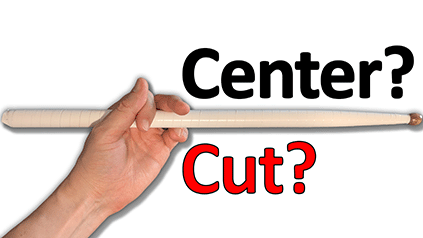
Show summary ▾ In this marching snare drum tutorial, I share the secrets to mastering traditional grip that I learned from world-champion instructors to help me become center snare in high school, college, and DCI. I break down why proper drumline technique relies heavily on forearm rotation rather than weak finger dribbling to play with maximum power, speed, and endurance. Throughout this rudimental drumming guide, I show you my exact stick placement, demonstrating how to rest the drumstick properly in your hand while maintaining a relaxed grip to build serious drum chops, improve your sound quality, and avoid common injuries like tendonitis. Whether you are auditioning for your school marching band or a world-class drum corps, I designed this video to help you achieve the consistency and technique needed to play clean at any tempo.
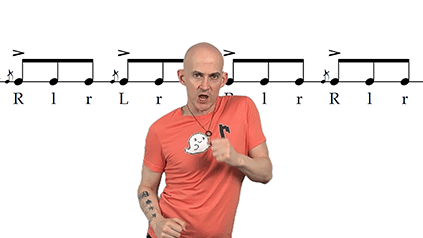
Show summary ▾ Looking to build your drumline chops and hand endurance? In this video, I break down a deceptively challenging rudimental exercise called the Slow Paradiddle (or Slow RLRR), which focuses heavily on flam accents, precise upstrokes, and maintaining a relaxed technique when playing back-to-back rudiments. I will guide you step-by-step through the alternating sticking patterns and tricky flam variations that will push your speed and control to the absolute limit. I've also included a built-in play-along track to help you lock in your timing and perfect your rhythmic interpretation of diddles, whether you are working on the standard version or tackling advanced marching rudiments like flam drags, cheeses, and flam fives.
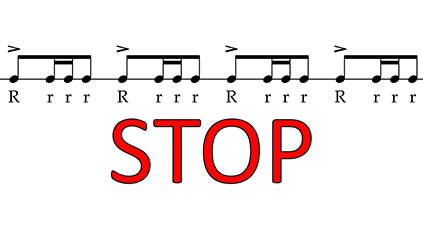
Show summary ▾ In this drum lesson, I break down why a popular flam exercise is actually holding back beginner drummers and how it can mess with your grace note timing by creating flat flams (grace notes that play at the same time as the primary note). While isolating each hand might seem like a good way to practice drum rudiments like flam accents, the leap to combining both hands is too large and doesn't teach you how to properly play both hands at the same time. Even for advanced drumline students working on complex phrases, I argue that isolating out each hand doesn't really help much. Instead, I recommend a gradual layering technique for learning rudiments that scaffolds your drum practice routine, allowing you to monitor your tap heights and stick control as you slowly add complexity. I demonstrate exactly how to build up to clean flam accents using this better approach, which you can also find in the Rudiment Builders playlist in the Technique section of my YouTube channel. This playlist helps you develop rudiments like flam accents, cheeses, flam drags, flam fives, inverts, flam taps, cheese inverts, and more. But if you want to learn more complex phrases, my absolute favorite advice for mastering your drumming is to practice incredibly slow (starting at 40 BPM) and gradually speeding up one click at a time. You can find the exercises I mention in my channel's home tab or in the Technique section of my website

Show summary ▾ Avoid drumming injuries like tendonitis and carpal tunnel with this essential hand care routine for drummers! Learn warm-up exercises, forearm stretches, finger stretches, and rotation stretches to improve your drumming technique and prevent hand pain. This routine also includes massage techniques for forearms, hands, and fingers, plus after-practice care tips like ice packs and compression to reduce swelling. Follow this daily drumming health routine to keep your hands feeling amazing, pain-free, and enhance your drumming performance for years to come! Use the timestamps to jump to a specific section and check out the thousands of free drumming exercises in my channel's home tab for more drumming content!
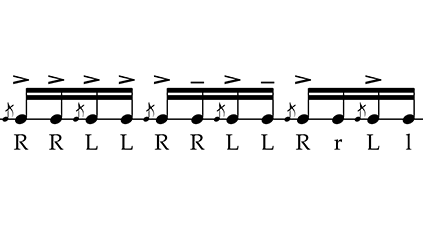
Show summary ▾ Flams taps are a common rudiment drummers play, but did you know there are three ways to play them? If you're playing flam taps on a drumline, you need to make sure everyone is playing the same flam tap interpretation. This quick tutorial shows you each of these three flam tap variations and a free exercise to help you practice speeding up flam taps.
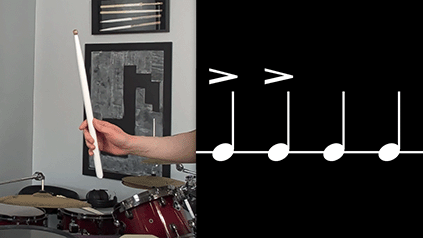
Show summary ▾ Unlock effortless drumming and improve your stick control by mastering drum rebound across three essential stroke types: legato strokes, upstrokes, and downstrokes. In this drumming lesson, I demonstrate how to stay relaxed and maximize your natural bounce by treating legato strokes like dribbling a basketball. I also break down the most efficient way to execute upstrokes by lifting with the rebound, and reveal the secret to clean downstrokes: controlling the stick's motion by adjusting the space in your grip rather than squeezing your fingers and choking the drum stick. Whether you are transitioning between drum accents and taps or working on your overall rudimental drumming efficiency, these technique tips will help you play faster and looser. Put these concepts to the test with a simple "two up, two down" drum exercise found in the Accent Taps playlist in the Technique section of this page.
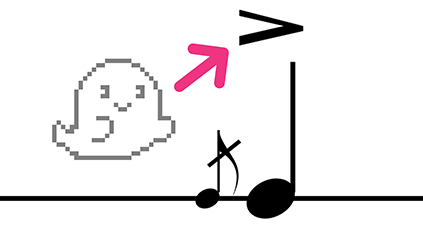
Show summary ▾ In this spooky drum lesson I'll show you how to take stick control to the next level by playing ghost accents! While standard ghost notes are super quiet filler notes on the drum kit that are felt more than heard, ghost accents trick the eye by using a high stick height that stops right before hitting the drum head, producing only the quiet sound of a grace note. Whether you are practicing ghost flam accents, incorporating ghost drags, or experimenting with flashy back sticking, this drum tutorial will show you how to master these spooky drum rudiments.
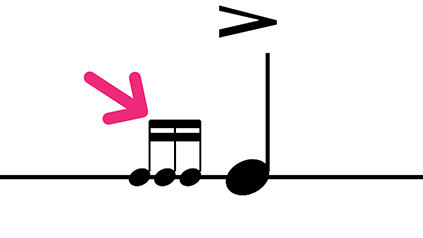
Show summary ▾ In this snare drum lesson, I break down how to play a ruff and explore the different drumming techniques you can use to make this essential drum rudiment fit any musical style. Whether you are searching for tips on playing rhythmic, open ruffs for a military march or need concert percussion advice for executing smooth, closed ruffs in an orchestral piece, I explain how to think about adjusting your approach to match the music you're playing. I will show you how to master grace notes by keeping your primary note strictly on the beat, and I demonstrate how altering your drum stickings and stick heights can drastically change your sound depending on whether you want to blend in or cut through an ensemble. From practicing with a metronome to perfecting your drum technique off both hands, this drumming tutorial covers everything you need to know about changing the spacing, height, and sticking of your grace notes to elevate your overall playing.

Show summary ▾ In this video I share how simply practicing the drums isn't enough to get good. We also need to think about how we recover between practice sessions, otherwise drummers will risk injury or burnout. I share actionable strategies for what to do in the first ten minutes, hour, and five hours after practicing to help you recover so you can perform at your best in your next drumming session. This video is packed with valuable information for drummers of all levels, from beginners to advanced players, as well as music educators looking to support their students. The more you focus on your recovery, the better you'll feel when you drum.
Show summary ▾ Using a bizarre lesson I learned from the 2020 toilet paper shortage, this video explains why beginner and intermediate drummers need to stop wasting time trying to learn viral drum chops and flashy drum fills just to get online views. Instead, I talk about why mastering essential drumming fundamentals, refining your core drum technique, and diligently practicing your drum rudiments are the true secrets to landing gigs and getting callbacks at auditions. If you want to know how to get better at drums, I highly recommend that you stop consuming the "junk food" of social media drumming and start treating your practice sessions like a balanced diet focused on the basics. If you're looking for thousands of free drumming lessons and exercises to help you do that, check out the other sections of this page.
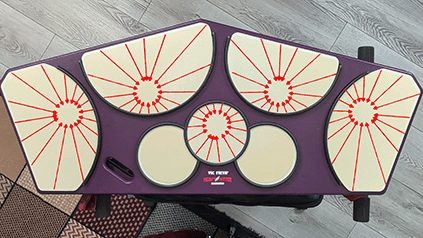
Show summary ▾ Ever wonder why tenor drums require more frequent tuning than other instruments in a marching percussion ensemble? This video debunks common misconceptions held by some music educators regarding drum maintenance and analyzes how different playing zones create uneven tension loss across tenor heads compared to snare or bass drums. Whether you are a band director budgeting for new drum heads or a student seeking drumline tips, this video will help you understand why you need to budget extra time and money for tenor drum tuning.

Show summary ▾ If you're holding your drum sticks in a way that causes them to vibrate, resonate, or hum while you're playing, that's usually a good way to hear if you're playing with a relaxed drumming technique. This applies to both matched grip and traditional grip, as well as with concert, marching/rudimental, drum kit/set sticks and techniques. So whether you march in a drumline (e.g., DCI/WGI) or gig with a band, this video demonstrates what stick hum sounds like and the thousands of free play-along sheet music linked above are excellent resources for practicing stick hum with perfect rhythmic interpretation. Use the timestamps at the bottom of my videos to find a bpm or drumming tip.
Show summary ▾ If you want to know how to improve your drum chops and play cleaner, this is a four-step drum practice routine that I learned studying with world-champion drummers and their drum instructors. To level up your overall drum technique, start by recording at your maximum tempo so you can analyze exactly how your stick control sounds, looks, and feels. Next, drop the metronome (or play-along) all the way down to 40 bpm to expose hidden rhythmic inconsistencies and refine your drum technique, ensuring things like left-hand taps and legato strokes are completely flawless. From there, increase the tempo by just 1 bpm per repetition, strictly maintaining a relaxed drumming motion even at incredibly slow speeds so you don't accidentally build bad habits. By repeating this highly methodical process daily over weeks and months, I have found it is the absolute best way to build explosive drum speed, develop massive endurance, and master your drum rudiments from the ground up.
Lol
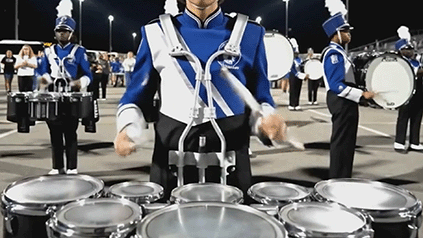
Show summary ▾ What does AI think drumline lot clips look like? I hope the answer makes you laugh as much as I did. I created the thousands of drumming resources above to help you improve your playing and teaching, but I created this video to laugh at AI drumline slop.
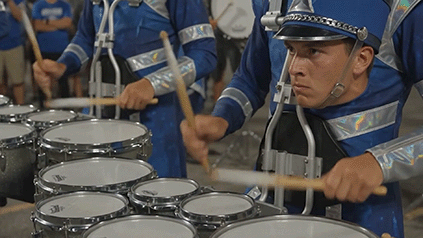
Show summary ▾ I wanted to see what AI would predict not only for the percussion scores on finals night for DCI 2026, but have Gemini generate the actual drumline solos as "lot clips." The results are hilariously bad for a variety of reasons and I had a lot of fun making fun of the AI slop.
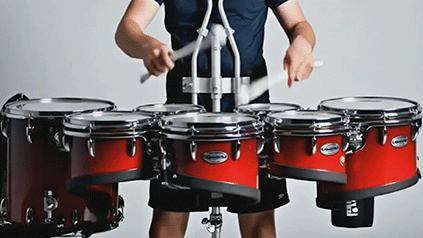
Show summary ▾ This video definitely answers that question. It’s amazing how bad these clips are. I had a good laugh and hope you do too when watching these AI drumming slop clips.

Show summary ▾If you’ve thought to yourself “I love playing Suzie, but I want to practice it at 1 BPM".” Well, now you can with this play-along! Bonus points if you change the playback speed to 0.25X speed!


